Friday Links
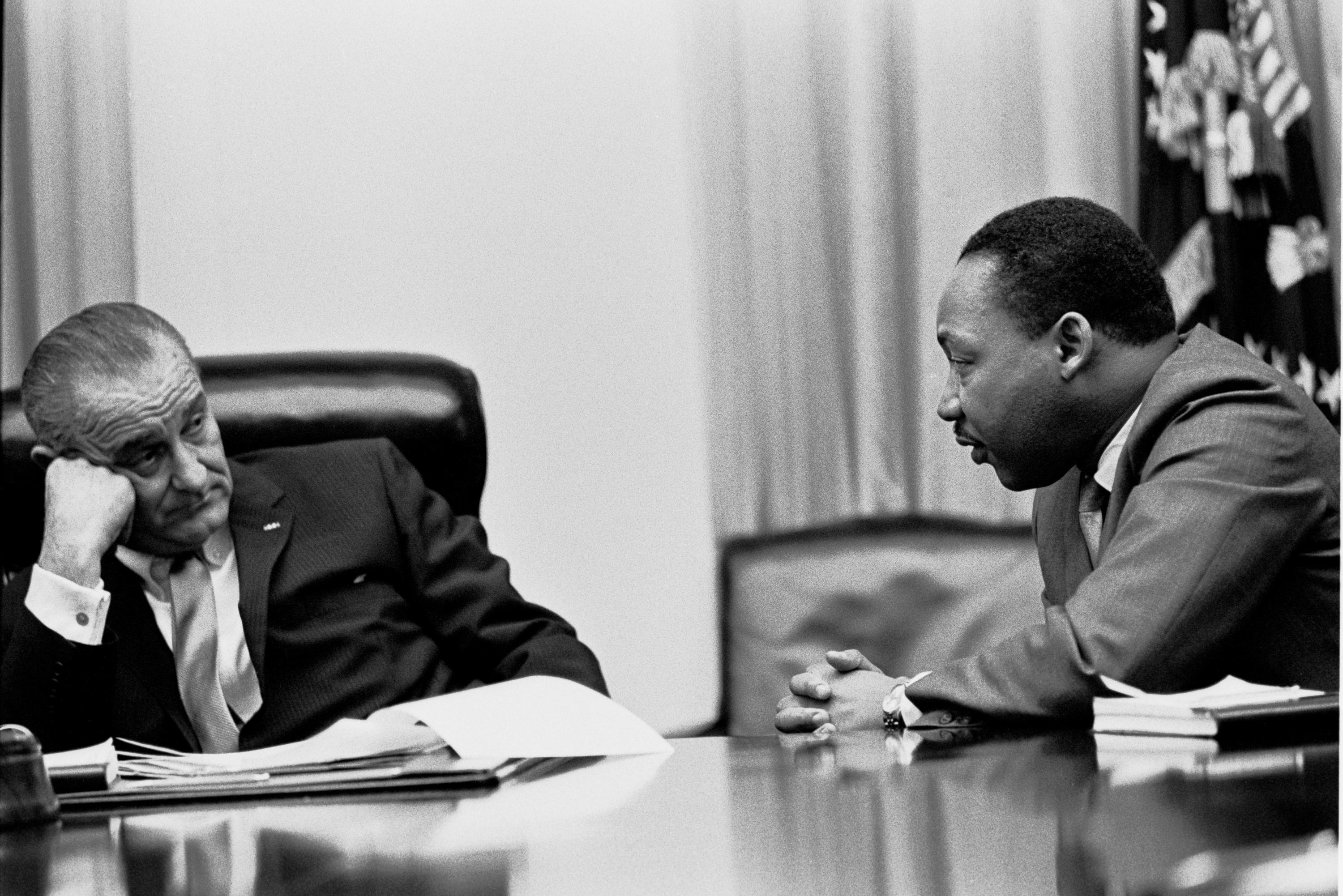
Apparently President Lyndon Johnson, known for his support of Rhodesia (and paradoxically for signing the Civil Rights Act of 1965 in the United States), had a big part in the origins of modern humanitarianism in the United States. Writing in The New Yorker reporter Philip Gourevitch recounts an order from Johnson to his Undersecretary of State as images of starving, wasting children from the Biafran War competed with images of the American occupation in Vietnam: “Just get those nigger babies off my TV set.” The US then apparently contributed a couple of million dollars to help Biafran refugees, though way less than Britain and other relatively wealthy nations.
* The Museum of Art and Design in Manhattan is hosting the massive “Global Africa Arts Project” in November. It features the work over 100 artists working in Africa, Europe, Asia, the United States, and the Caribbean.
* Link to pictures from the wedding of Congolese politician Mbusa Nyamwisi’s wedding in Kinshasa. Some bloggers (and twitterers) made a meal of it, but some people told me they’ve seen better in Lagos and I can vouch for the gaudiness of Johannesburg nouveau riche weddings.
* Twitterers in the Nigerian capital Abuja tweeted the #Nigeriaat50 bomb explosions during which eight people died. [Committee to Protect Journalists]
* In the DRC, “ . . . [a] DR Congo rebel commander has been arrested on suspicion of leading raids on villages in the country’s east where 500 people were raped in late July and early August, the UN has said. UN headquarters in New York circulated an announcement by the UN peacekeeping force in Congo of the arrest of commander of a tribal Mai-Mai militia, known as Lieutenant Colonel Mayele, for alleged mass rapes.” [Al Jazeera English]
* Photographer Danny GoldbergGoldfield’s new book, “NYChildren: A child from every country. All in one city,” which includes profiles of African immigrant kids, will be launched at the International Center for Photography in Manhattan on October 22.
* I.B.M sees Africa as “the next growth frontier.” Link to puff piece on the The New York Times’ Bits Blog predicting projected profits in the region of US$1bn. per annum.
* The other CNN (that’s CNN International, not the one you see in the US) traveled to the house (slash museum) of photographer Alf Khumalo in Soweto. Oh, they also did a fluff piece on a South African arms dealer.