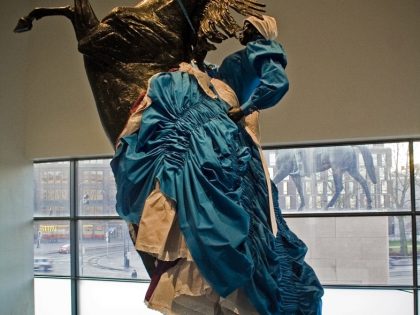
I am no contemporary art expert. Sometimes one has to start with a disclaimer. The term and whatever definition whoever gives to it have been on that awkward zone where I have felt that I should be equipped with more specific knowledge to say even something quite generic about it. Also, my intuitive and somewhat outdated direct connection between the idea of contemporary and fine art has always had this self-manufactured inner conflict with my identity relating to counter culture. Even if the conflict wouldn’t really exist, I have imagined it. I think I have been quite elitist in avoiding certain kinds of art, so I found myself rethinking a few things as I was going to see ARS 11 exhibition in the Kiasma museum of contemporary art in Helsinki, Finland. This year the tag line promised that the exhibition “changes your perception of Africa and contemporary art”.
Shake hands with your ancient self
What do you do as a South African tourist industry when the promised surge in visitors after the World Cup fails to materialize? You move your aim, target the local ‘upcoming individuals, independent couples and families’, draw up an ‘energetic, vibey and pacey’ campaign, get some of those upcoming individuals on board — and you turn the local into a daft trope.
The BLK JKS, for example, take a left turn where the hitch-hiker’s carton says ‘local’, meeting up with ‘the original men: the San’, shaking hands ‘with their ancient selves’. South Africans are urged to get out of their ‘comfort zone’, ‘get off the map, get out of the suburbs, keep moving’, because ‘sometimes you’ve got to loose your way, to find yourself again’:
(Re)construções
Mary Sibande
The Johannesburg-based artist Mary Sibande who creates life-size sculptures of black women in brightly coloured and elaborate Victorian dresses, is one of two African artists (among 30 plus artists worldwide) awarded the Civitella Ranieri Foundation fellowships “… which every year brings several dozen visual artists, musicians, writers, poets and other creative types for six-week-long fellowships in the fifteenth-century Civitella Ranieri castle in Umbria.” The other is photographer Zanele Muholi.