The Day After
Locals after South Africa successfully hosted a global, mega-event: why can't it tackle its inequalities with the same energy and efficiency?
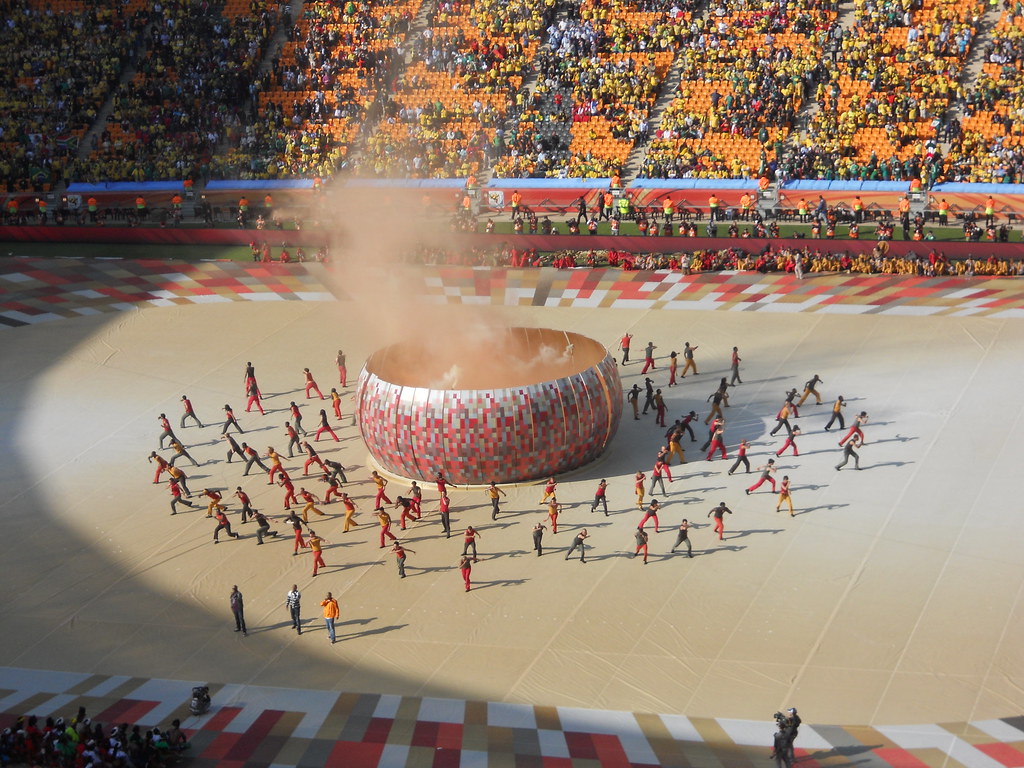
Image by Shine 2010, via Flickr CC.
The football World Cup, hosted by South Africa, is now over after a final match that rivals the 1990 World Cup final in Rome between Germany and Argentina for its negativity, ugliness, aimlessness and overzealous refereeing. Andres Iniesta’s extra-time goal ensured the right result at least. Spain is a deserving champion.
We can all go back to our normal lives now.
But if, like me, you need more football related stuff to tide you over till August (when the major European domestic competitions resume as well as qualifications for continental competitions like the African Nations Cup), here are some good summer reading:
The journal “Social Text” has published a set of posts on the 2010 World Cup’s meaning and significance. They are by Jennifer Doyle, Nikhil Singh (who edited the posts), Andrew Ross, Patrick Bond and Eli Jelly-Schapiro, among others. There’s also a piece by myself, culled from this blog, about the repeat of widespread xenophobic attacks against black African migrants in South Africa.
The journalist Siddhartha Mitter, in a piece on the new music and culture portal OkayAfrica, asks whether this World Cup was really African.
Are the Netherlands’ football tactics – once copied by Spanish teams – been replaced by a style reflecting the rightwing turn in the country’s politics? The writer David Winner – remember, he wrote the book “The Brilliant Orange: The Neurotic Beauty of Dutch Football” – thinks so in a piece in The Observer.
A piece on The Atlantic Monthly’s blog by Eve Fairbanks, an American journalist currently living in South Africa on a fellowship, writes about foreign (and local) journalists’ search for what they deem the “real South Africa.” Here’s an excerpt:
. . . It’s the first African World Cup, and we came here needing to see something, well, African. The images that came easily were all wrong. The stadiums were too shiny, the hotels too continental. An anxiety began to creep in that we weren’t getting the real story.
The South African journalist, Mark Gevisser, writing in The Guardian, gets delirious (who wouldn’t?) about how well South Africa handled its hosting duties, but then asks the obvious question:
. . . [I]f South Africa can deliver a global mega-event, why can’t it tackle its inequality with the same energy and efficiency.