What Pieter Hugo’s photographs stand for or what they can and cannot tell


Guest Post by Andrea Stultiens
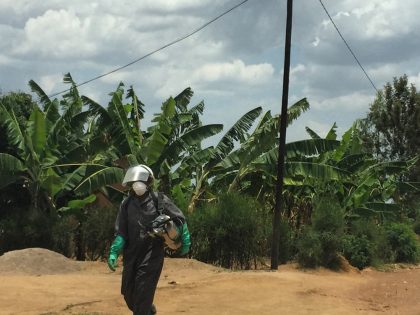
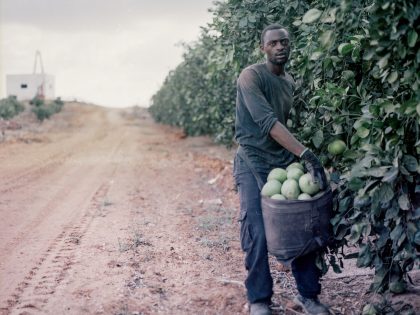
I recently went to see the Pieter Hugo retrospective at The Hague Museum of Photography (The Netherlands). His series ‘The Hyena and Other Men’ looked more grainy than I expected, based on online publications. The scale and resolution in web prints remove the grainy quality of the big, framed images. I also finally realized that Hugo followed only one group of men, with one hyena, a monkey, a dog and a snake. Somehow, I used to think that the single images I saw were simply an example of a larger number of similar men and animals photographed by Hugo as he traveled through Nigeria. The exhibition in The Hague also made me realize that I am not the only person overestimating and at the same time underestimating what Hugo’s photographs stand for or what they can and cannot tell with what they show.

[Read more...]

‘The Love Mantra’

New video for single from Brooklyn-based Rwandan singer Iyadede‘s new album, “The Demo.” (Remember her recent cover of Theophilus London’s “Flying Overseas”?) The video is directed by Sam Kessie.

Krumping Africa

American photographer David LaChapelle’s 2005 krump documentary, “Rize,” (trailer here) included a laughable section that invented a history of the dance genre among “traditional” Africans.* I guess since the dance originated and was popular among black teenagers and young adults in poor parts of Los Angeles, it had to have African origins. But not even LaChapelle would have guessed his documentary’s enduring legacy back on the continent. Take this recent four minute video, above, about krump’s popularity among teenagers in Liberia. Then there’s this video shot in Cape Town of “krump crew” Royal Fam Kings (R.F.K.) [H/T: Dylan Valley]:

[Read more...]

Music Break. Gaël Faye

Bujumbura-born Gaël Faye (you know him from the Paris hip hop outfit Milk Coffee & Sugar) returned to Burundi to record this video with singer Francis Muhire for ‘Petit Pays’ (a first single off his upcoming ‘autobiographic’ album). It’s an ode to that ‘small country’, with the images pushing some safe buttons (happy kids and green rolling hills), but Faye’s French parlando is quite beautiful, his mind floating between the Burundi of his past, the Rwanda of his mother and the France of his father.

Rwandan film part of prestigious traveling film exhibition


In December, the Global Film Initiative announced ten award winning narrative feature films to represent their Global Lens 2012 series, a collaboration between MoMA and the Global Film Initiative, which will tour the world as a traveling film exhibition. The series aims to coax filmmakers in emerging film communities into action by showcasing the talents of contemporary global filmmakers. The films selected for this years collection come from Argentina, Brazil, Colombia, Iran, Iraq, Morocco, Rwanda and Turkey — a truly exciting cross section of recent world cinema output. Rwandan director Kivu Ruhorahoza’s Matière Grise (Grey Matter) was one of the films selected, following a fantastic reception at various film festivals. The first film made by a Rwandan, living in Rwanda, and shot in Kigali, Ruhorahoza’s film premiered at Tribeca in 2011, and portrays life in Rwanda today, merging fantasy and reality through the confused lens of memory and trauma to depict the aftermath of the genocide.  [Read more...]

Music Break. Corneille and La Fouine

Crooner Corneille (born in Germany, raised in Rwanda and now a Canadian citizen) performs two of his songs with the help of rapper La Fouine (French of Moroccan descent)–we’ve featured them here before separately–live on French radio show, Planete Rap Skyrock.

Kinyarwanda goes online

In January 2011 director Alrick Brown’s feature “Kinyarwanda”–a film about “6 people struggling through the Rwandan genocide”–won Sundance’s award for “World Drama” (that’s a big category, but we’ll move on). In December last year it had a limited release, including here in New York City. I missed the screenings. In most cases films like “Kinyarwanda” would vanish and months later pop up on Netflix with little marketing where, unless someone in the know tells you, you’ll know never see it. Or the filmmakers will do their own guerrilla marketing. But that won’t be needed now as digital rights to “Kinyarwanda” have been snapped up by Snagfilms, which has an online library of more than 3000 films. That means you can order it or see it via Snagfilms’ partners “… Comcast Xfinity, FiOS, DIRECTV, iTunes, Amazon and VUDU.”

Via Shadow and Act.

Music Break. Friday Bonus Edition

You won’t see or hear a more exciting song by a South African rapper this year than Kanyi’s ‘Ingoma’. Produced by Mananz, with Teboho Semela (sister of Ben Sharpa) on violin. From Gugulethu, Cape Town:

[Read more...]

‘Nigeria’s own Donald Trump’

MTV Base, the music channel’s African subsidiary carried on satellite TV, have been making these upbeat video features, where a group of upwardly mobile young Africans–most based on the continent–interview leading businesspeople, entertainers and a few public representatives (I spotted Julius Malema and Paul Kagame in the series promo). At the same time the interviewers are also profiled. The videos come in at 20 minutes or so and are sponsored by cell phone company, MTN.

A few are online. The first is an interview with Nigerian business tycoon, Aliko Dangote, who has a reputed net worth of US$13.8 billion and is the 51st richest man in the world. The presenter hypes Dangote as “Nigeria’s own Donald Trump” which is odd since Trump is hardly a successful businessman.

[Read more...]

Typecasting Binyavanga Wainaina

By Caitlin Chandler

How do you write about a place that occupies a mythic place in the imagination of outsiders? And how do you write about national and personal identity when identity does not obey the neat idea of nation states and borders?

American novelist William Faulkner created Yoknapatawpha County, a fictional Southern community, wrapping his stories in a fragmented language, trying to protect the towns and people he described from being recognizable and known. To write about the American South, which in Faulkner’s time and our own comes wrapped up for non-residents in a set of tropes, produced in Faulker an anxiety of representation he could only remedy through producing an imaginary geography.

Binyavanga Wainaina instead delivers a memoir, One Day I Will Write About This Place, rooted firmly in the real landscapes of his home.

[Read more...]

Follow

Get every new post delivered to your Inbox.

Join 2,265 other followers