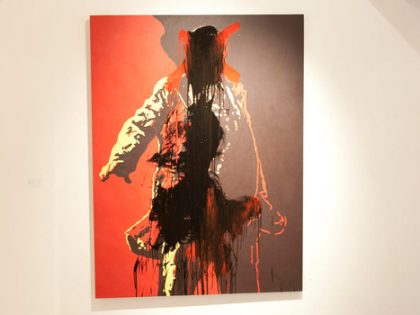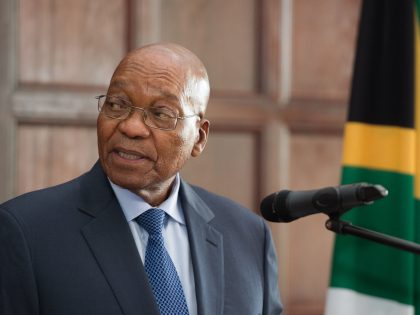
Between the relentless media coverage, the twitter deluge, the pronouncement by a South African judge (“This is a matter of great national importance”), and declarations by the South African President’s daughters about “the straw that broke the camel’s back,” you might be forgiven for thinking that–finally–some urgency about South Africa’s big issues was making national news. Were we talking about how to deal with the persistent racial and class inequality, joblessness, and a lack of government accountability? Not so much.
The Jacob Zuma Era

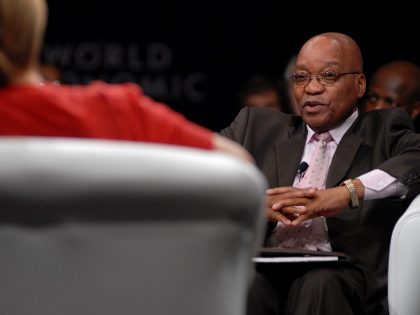
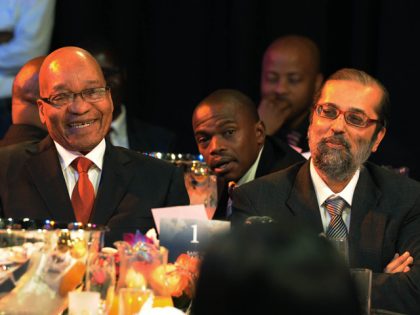
Coming on June 1 is Northwestern University journalist professor Doug Foster’s new book, After Mandela: The Struggle for Freedom in Postapartheid South Africa. The book is published by WW Norton in New York City. The title is unoriginal (Financial Times’s Alec Russell had the same title) but should not take away from what I think will be an excellent first take on Jacob Zuma’s presidency. Norton is marketing it as “the most important historical and journalistic portrait to date of a teetering nation whose destiny will determine the fate of a continent.” They promise that Doug has had “early, unprecedented access” to President Zuma as well as to “the next generation in the Mandela family.” The book is based on six years worth of interviews. I am looking forward to reading it. Here to remind you of Doug’s style are excerpts from a 2009 profile of Jacob Zuma in The Atlantic Monthly. [Read more...]
Julius Malema’s History

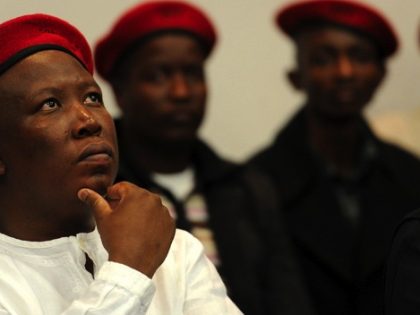
Last week, after Malema was expelled from South Africa’s ruling party, we went back and looked at our archives to see how we’ve blogged about him and his politics. Here’s a sample. [Read more...]
February 11, 1990

Today, 22 years ago, Nelson Mandela walked free from a prison outside Cape Town. Four years later, in April, the ANC won South Africa’s first democratic elections and in May 1994, Mandela was inaugurated as South Africa’s first black president. These were, however, only 22 years in the 100 year history of the ANC and in the long history of colonialism, Apartheid and now brief freedom in South Africa. Last month the ANC held a massive party in Mangaung, the place where it was founded in January 1912 by a small group of activists. Hundreds of thousands people headed to the capital of the now Free State province. But this is also a different ANC. Its legacy is not so clear cut anymore and we have covered the personalities that shape it as well as some of its calamities on this blog. Amongst the thousands at the ANC celebrations in Bloemfontein was Prexy Nesbitt, a trade unionist, college professor (he’s taught for years at Columbia College) and leading figure in the US anti-apartheid movement as well as the liberation struggles in Angola and Mozambique between the 1960s and the 1980s. He has a long association with Southern African freedom movements. When Prexy returned to his home in Chicago, he jotted down his impressions of the celebrations, of the ANC and South Africa. With his permission we republish it here. We think it is a fitting reflection on the commemoration of a momentous day. –Sean Jacobs [Read more...]
Fly-by-night Journalism
In one of the oddest welcomes to the new year, Eurasia Group included South Africa as one of ten on a list of “Top Risks for 2012.”* Other entries include North Korea, Pakistan and Venezuela. On Al Jazeera English’s program “Counting the Cost,” during an interview with 2 representatives of Eurasia, risk no.9 became “South Africa (ANC).” (See the 7.50 mark in the linked Youtube video.) The same kind of hysterical sentiment (because it is not analysis) informs media coverage of the ANC’s one hundredth anniversary celebrations this past weekend. From the media you’d get the impression that the party’s celebrations were being held to an empty stadium (with only Jacob Zuma and Julius Malema present) and that the ANC’s support (largely grassroots) had deserted it. Instead we know, as the New York Times had to point out, that “tens of thousands” filled a stadium in the Free State provincial capital Manguang. Elsewhere we learn that millions watched it live on TV. A quick scan of the hashtag #ANC100 on Twitter suggest most people who watched or talked about the celebrations got the significance of the date and the achievement as well as the ANC’s continued pull in South Africa. So did people’s status updates on Facebook. They know the ANC is not just Malema and Zuma. Anyway, as Jonathan Faull has blogged here before, reporting on South Africa basically amounts to parachute journalism. But even media outlets that should know better, like The Guardian, can’t help themselves. [Read more...]
Parachute Journalism
In my previous life as a South African political analyst, I would spend long hours on the telephone to a ‘political risk analyst’ in New York, working for a major international investment advisory group. The conversations were not always easy, and much of my time was spent rebutting base assumptions that South Africa was the incarnation of the North’s flawed understanding and projection of ‘Big Man’ politics and ‘clientalism’ in West Africa.
Sample questions would include “Is he a Zulu?” or “Is he from KZN? [KwaZulu-Natal, Zuma's home province]” with regard to anyone associated with Jacob Zuma, and complete incomprehension with regard to the nuanced machinations–however flawed–of the ruling tripartite alliance. I was constantly asked to divine the outcomes of leadership squabbles, business deals, and court cases, because–naturally–the tea-leaves of African ethnicity, patronage, and inter-connected corrupt activities trumped the irritations of independent institutions, profit motive, and constitutional democracy.
Malema time
The levels of existing poverty, unemployment and material inequality in South Africa are politically and socially unsustainable. This much has always been true. For the country to flourish, democracy –in that well worn cliché –must deliver a “dividend” through the material improvement of the lives of the poor majority.
Towards this end, the ruling ANC has failed–under often difficult circumstances of course. Massive housing, electrification, sanitation and social grants schemes – while admirable – have arguably transformed the masses into lumpen recipients of goods; clients to a system that perpetuates aspects of destitution without changing them. Increasingly, the ANC’s failures stretch beyond the confines of economic policy-making as the party –increasingly the preserve and battle-ground of elites–sets a course adrift from the grievances, concerns and aspirations of the very citizens they claim in their name.
The suspension today of Julius Malema, President of the ANCYL, and his rise and fall, must be read against this backdrop.
The Ideology of the Democratic Alliance

This piece, below, on the politics of the South African opposition party, the Democratic Alliance (led by Helen Zille, above), was written by Jane Duncan (a journalism professor at Rhodes University) well before the recent local government elections in South Africa, but has a shelf life far beyond that result:
The DA under the leadership of Helen Zille is a political phenomenon. It is winning more hearts and minds, including in working class communities that had previously shunned the party. Many people are desperate for an electoral alternative to the ANC. But as tempting as it may be, South Africans must be wary of adopting an ‘opposition at all costs’ approach.
While tons of ink have been spilled analysing the social justice content of ANC’s policies and practices, very little serious attention has been paid to what the post-fight back DA actually stands for, and what the long term implications are of its growing popularity. The media’s focus on the touchy-feely aspects of Zille’s campaign has also obscured more substantive questions.
What type of society does the DA want to build? The core concept of Zille’s DA is one of an ‘open opportunity society for all,’ which it counter poses to the ANC’s ‘closed crony society for some’ where a clique rules to accumulate wealth. For the DA, a competitive job-creating economy, supported by an efficient education system, are the main drivers of this society.
The DA is not the originator of the open opportunity society concept; it has a long historical pedigree in political theory and practice. This society is a meritocracy, where government enables individual advancement on the basis of supposedly inherent talents and industriousness, measured usually through academic credentials, rather than on characteristics such as race, gender or political affiliation.
Open opportunity proponents proceed from the assumption that society should consist of hierarchies of achievers and non-achievers: so, they do not reject the notion of social hierarchy per se.
The open opportunity society is based on a conservative political philosophy, as it provides an ideological defence of the capitalist system. The children of the historically advantaged invariably have a head start in realising inherent talent. This society attributes an individual’s lack of success to individual weaknesses, not the system.
Britain’s New Labour party, under Tony Blair, also adopted the open opportunity society as the ideological counterpart to its neoliberal restructuring of the economy and society. As a result, inequality grew more rapidly than it did under John Major’s conservative government. The capacity of those on the higher rungs to reproduce their privileged positions increased, with no evidence of downward mobility if their offspring were less talented. In contrast to the stated intention, Blair’s open opportunity society became, in Alex Callinicos’ words, “entrenched inequalities of opportunity.”
The DA does acknowledge that the enjoyment of opportunity and choice has been heavily affected by apartheid. But its proposals for redress are inadequate, and are likely to be overshadowed by its broader societal framework, which is much more out rightly neoliberal than the ANC’s: a sort of Growth, Employment and Redistribution Plan (GEAR) on steroids.
The party advocates public sector rollback in the direct delivery of services as a backlash against the ANC’s strong developmental state. Rather, government should facilitate service delivery, mainly by the private sector, in the classic neoliberal mode.
The DA aims to provide what it refers to as a framework for choice of goods and services, such as schools. The party bases their conception of choice on trickle-down economics; so, as global competitiveness drives economic growth and society becomes richer, its members will be able to exercise the rights and choices for services.
Choice was an often-heard slogan of the Blair administration as well, where it was used to justify the marketisation of social services like housing to create more choice, leading to those with access to capital being unfairly advantaged. In his critique of Blair’s housing policy Peter Malpass argued, “choice is a weasel word, a seductive device concealing that what is really afoot in the opportunity society is promotion of the interests of the better off and toleration of wider social inequality, to the further disadvantage of the poor.”
The DA’s economic policy is business friendly in the main, as it advocates the cutting of corporate tax and the reviewing of labour legislation to make it easier to hire and fire workers. Infrastructure rollout should be privatised through public-private partnerships, as should public health care provision, where possible. These proposals are to the right even of the ANC’s GEAR plan.
Government should devolve as much power as possible to schools, universities, hospitals and local governments to manage their own affairs. The danger with this approach is that it will entrench pockets of privilege, where dominant social groups contract themselves out of the national agenda under the guise of ‘self-government’.
The DA’s education policy subscribes to human capital theory, which considers the purpose of education to be the production of skills for the market, and the raising of productivity and hence economic growth. Tellingly, its policy is silent on the role of education in producing a critical citizenry.
In the long term, individual advancement and competitiveness will be incentivised through a voucher system aimed at giving learners from low income households an opportunity to receive better education, thereby increasing their choice of schools. Schools achieving outstanding results will also receive incentives. Underlying these proposals is the assumption that competition produces efficiencies in the delivery of services.
The voucher system has evoked controversy internationally for draining public money away from already-underfunded public schools, which is then used to cross-subsidise private schooling: a sort of privatisation by stealth.
The DA sees higher education as a gateway for social mobility, where students are encouraged to hold the tragically impoverished view that personal growth amounts to advancement in professional markets. The party invokes the technocratic discourse of ‘innovation’ – where companies seeking competitive advantage over their competitors use universities as knowledge factories – to promote greater private sector involvement in the higher education sector. The negative implications for academic freedom should be self-evident.
The DA also advocates differentiation in higher education, where Colleges of Higher Education develop skills for the market, universities provide teaching, and Centres of Excellence (which the DA intends to be elite institutions) provide cutting edge research.
Such differentiation is pedagogically questionable, as it will artificially strip off teaching from research, impoverishing both teaching and research. Clearly the DA wants the education system to produce subjects, not citizens.
In addition, differentiation will probably lead to the lion’s share of public resources being directed to the most likely candidates for Centres of Excellence, the former historically advantaged universities, which are still populated largely by the sons and daughters of the powerful and privileged. This ‘aristocracy of merit’ will dominate knowledge-generation, which is likely to lead to a society that is unable or unwilling to resolve its most pressing problems.
The DA’s communication policy argues for light-touch regulation in the era of convergence, which will pave the way for the dominance of the post-digital migration airwaves by media monopolies. Its policy is completely silent on the future of the most popular and accessible medium in the country, the South African Broadcasting Corporation, suggesting that the broadcaster’s future may be precarious under a DA government.
This is not to say that the DA does not recognise the need for redress or the social wage. The party argues for the universalisation of the old age grant, as well as the adoption of the basic income grant. But these proposals will do nothing to correct the structural distortions in the economy that create vulnerability.
The tent pole of the DA’s strategy for local government elections is to use Cape Town as a model for good governance, and to capitalise on the ANC’s many failings at local government level. Certainly there are indications that the DA has done better administratively than the ANC.
But the roots of the near-collapse of many local governments need to be understood, as the problems are deeper than poor administration. With the onset of GEAR, national government transfers to local government were drastically reduced, forcing local governments into self-sufficiency that many could simply not afford.
The DA policies suggest that the party will drive local governments even further down the road of self-sufficiency, further disadvantaging poorer municipalities outside the wealthier Western Cape.
In view of South Africa’s liberation history, it is a tragedy that that the second biggest political party in the country is to the right of the ANC. It creates space for a shift to the right in South Africa’s politics generally, which in turn provides a basis for the ANC to continue its centrist shift as well.
If this shift takes place, then mass unemployment, service-delivery cut-offs and inequality generally are likely to intensify. But then these problems will be blamed on the lack of industriousness of the individual, not on the policies. Mass despondency is likely to set in. The insufferable white arrogance that is such a strong feature of life in the Western Cape is likely to spread further afield.
In campaigning against the ANC’s rocky performance at local government level, Zille has portrayed herself as a champion of social justice, even invoking the names of Nelson Mandela and Chris Hani.
Yet Zille’s open opportunity society is a clear and present danger to the social justice agenda.
The more the political debate revolves around a centre-right axis, the more impossible it will become to achieve, or even imagine, the conditions for true human emancipation …
The Julius Malema Project
Hein Marais assesses last week’s election results in South Africa:
The election outcome presents the ANC with little more than temporary respite. Disgruntlement and community protests will continue, and the party’s authority will be tested, not least by its own supporters.
These are not teething problems. They are anchored in deeper economic and social crises that date back to the 1970s, and which the ANC government has not yet been able to resolve. It has worked to improve the lives of the black majority, yet close to half the population lives in poverty; jobs are scarce, the country is more unequal than ever, and insecurity is rife.
These realities will keep generating insubordination and eventually will spark instability. With the scope for material change seemingly cramped, other ways of bolstering authority and building consent have to be found.
One tried and trusted way of defusing uproar is to affirm and valorise bonds that can muffle discord, or channel it in diversionary, more manageable directions.
Exclusionary interpretations of belonging, entitlement and rights might soon prove to be politically rewarding – even, or perhaps especially, in a society that was split asunder by apartheid.
There is a real danger of a recourse to rousing affirmations of identity and entitlement, and to populist discourses of authenticity – who is a “real” South African, who is a “real” African, who is black, what is a man, and where women fit into all this.
These manoeuvres might be accompanied by ever more “narrow and exacting” interpretations of culture and tradition. Antipathy toward the “alien luxuries” of liberal constitutionalism might gain support; indeed, heartfelt misgivings about “hollow rights” and a “paper constitution” already circulate.
Left unchallenged, this might well develop into a form of populist nationalism. Some in the ANC seem willing to risk such an experiment, in which social conservatism can be combined with licence for acquisitiveness and immoderation, with targeted largesse serving as a lubricant. Some recognise in the Julius Malema spectacle the prototype of such a “project”.
The outcomes are difficult to predict. No doubt such moves will be hotly contested, from both inside and outside the ANC. But it would be foolish to assume a progressive outcome.
Too many coarse tendencies and brazen interests now rub shoulders with power.
Read the rest of the article.