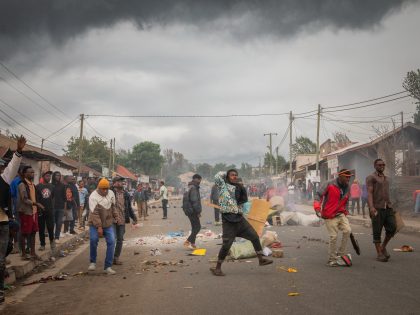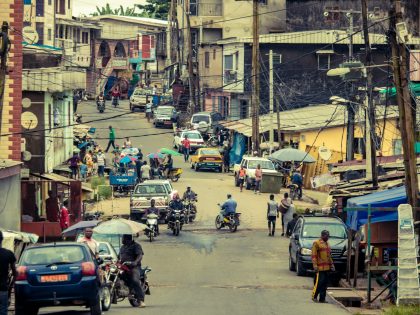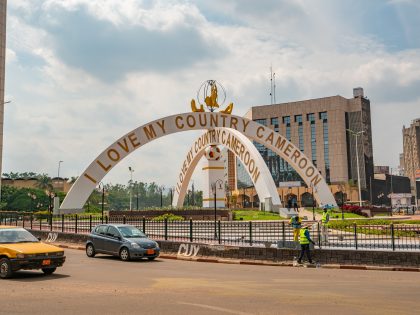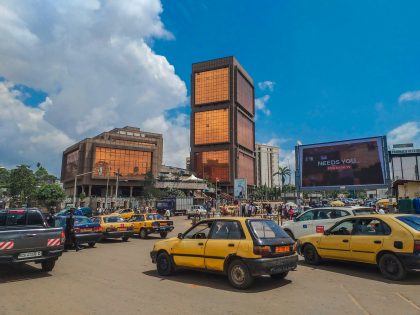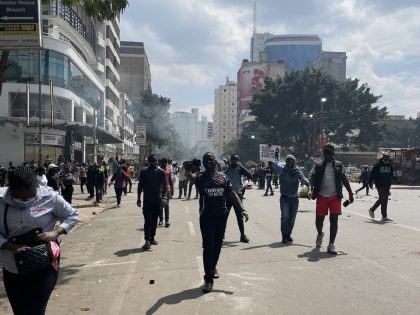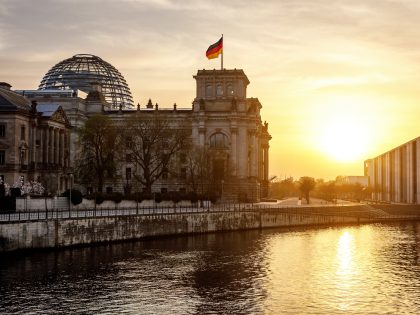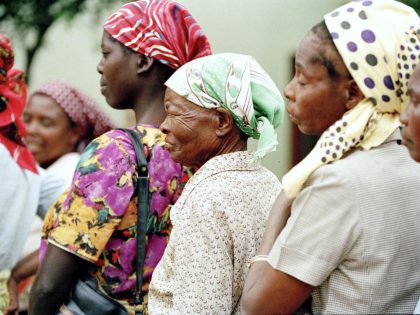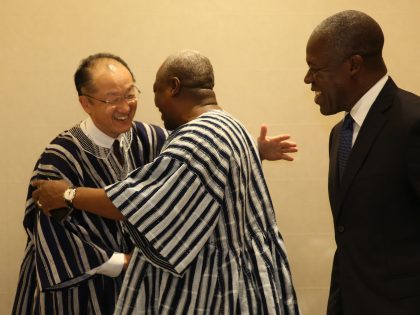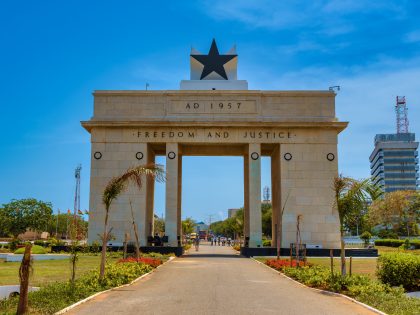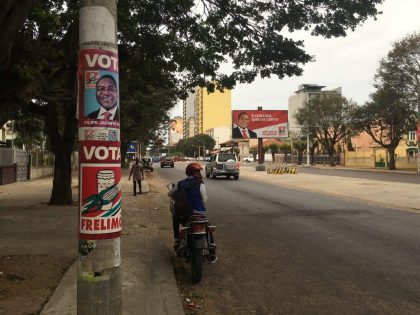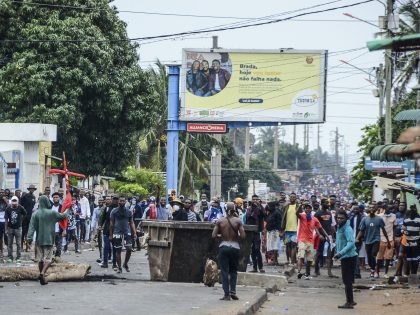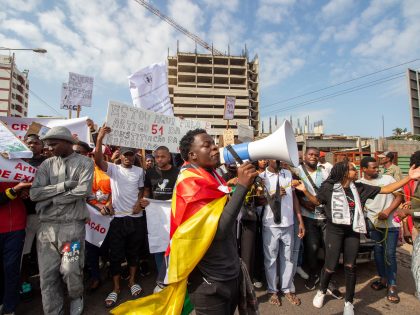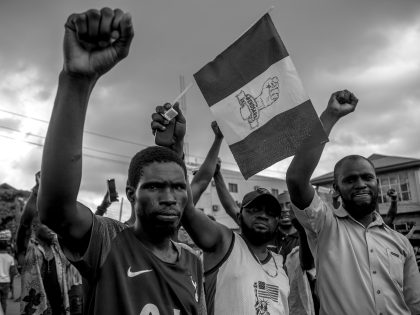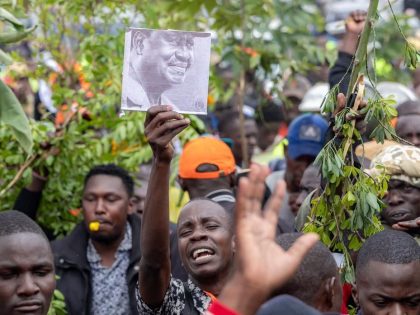
Paris 20ème, Sunday, 8 p.m. Shouts, people banging pots from the windows, children running in the streets—in our neighborhood of workers and immigrants everybody else is upstairs, glued to the television. A man—African by his accent—is declaiming from his balcony. In the empty backstreets, a woman comes up to us in tears, “it’s too beautiful—Hollande won!” In round two of France’s presidential elections, Nicholas Sarkozy is K.O.’d. [Read more...]
The other African election, Round 2: Sarkozy K.O.’d
The dancing Senegalese man
Senegal voted this weekend. Abdoulaye Wade is gone after 12 years. Macky Sall, once Wade’s protege and variously prime minister and minister of mining under the old man, is now in charge. Only Senegal’s fourth President since independence in 1960. So not a clean break with the past (though the two did fall out over the role of Wade’s son Karim in government affairs). We hope to have a few post election analyses posts up in the next few days. Till then enjoy the exuberance of “the dancing man” filmed (with a cellphone?) by Al Jazeera journalist Azad Essa in Dakar last night.
Is Youssou N’dour qualified to be President?

Al Jazeera English’s “The Stream” have been focusing a lot on African news themes lately: first South Africa’s ANC’s 100th anniversary; then yesteryday they dedicated the half hour program to #OccupyNigeria. The producers invited journalist Omoyele Sowore of SaharaReporters, Afrobeat musician Sean Kuti (who have been prominent in marches), and Gbenga Sesan from the group Enough is Enough Nigeria. Lively discussion ensued as, among others, Nigerian and international media’s role in the events also come under scrutiny. Later today (2.30pm Eastern Standard Time) they’re continuing the focus on African themes when Senegalese singer Youssou N’dour’s run for president gets an airing. Word is N’dour will be on the program. It will be interesting to see how they tackle N’dour’s candidacy, reported thus far in breathless tones in Western media.
Egypt Elections
Egypt’s parliamentary elections are underway despite the intense violence that has rocked the nation over the past few weeks. While we all watch and wait (and vote!), a friend reminded me of this song (originally by the legendary political musician Sheikh Imam) sung by Eskenderella, a popular Egyptian band. A rough translation of the lyrics (from a friend of a friend) is below the jump.
Congo Votes
Over the past week, it was hard to find an article published in a major international press outlet not looking at the build-up to today’s presidential elections through the lens of fear and/of violence. With the exception of a few, most foreign journalists didn’t make it outside of Kinshasa (citing logistical problems). People did get killed in the Congolese capital on Saturday, and in Lubumbashi today, but the way this violence creeped into the international headlines clouds the calm and smoothness of the election process in other parts of the countries, as reported by Congolese citizen journalists on their blogs, in their local papers, or on their facebook pages. Congo is more than two cities. Other journalists tackled it from afar: The Financial Times, for example, is reporting the #DRC elections from Nairobi? That’s 2 days driving to Kinshasa.
Liberian Demo-crazy
There’s been a lot of rumors and propaganda flying around related to the Liberian run-off election, so it’s hard to get a sense of what’s really happening on the ground. But international and local news show that the police have killed three people, radio stations are being closed, and burnt down, and votes are being counted invalid.
Worst of all the tense atmosphere and a boycott by the CDC party has led to low voter turnout. If anything, this should be a wake up call to all those that thought having democratic elections would sweepingly solve a post-conflict country’s problems. Let’s hope that these dark days are just a short detour on the long road to the empowerment of the Liberian people.
Photo Credit: Glenna Gordon
The Assault on Patriarchy in Tunisia
By Dan Moshenberg
Tunisians went to the polls on Sunday, October 23, 2011. Remember the date, because it’s historic. It’s the first free elections of the Arab Spring, which is, in large part, an African Spring. Tunisia. Egypt. Libya. Maybe Algeria next, maybe Morocco. Who knows? Maybe Zimbabwe. If the Prime Minister of Zimbabwe can declare that gay rights should be included in the new Constitution … anything can happen. Anything can happen, that is, when people organize and push.
When Mubarak left office, in February, the Western press described the event as Mubarak stepping down. Mubarak didn’t step down. He was pushed … by Egyptian women in league with many others. When Zine al-Abidine Ben Ali and his crew fled the country, again, it was women who pushed … and have kept on pushing.
The Jasmine Revolution, from its inception, was more than “just” the eviction of a dictator. It was an assault on patriarchy, one that emerged from and as part of a decades long process of women and youth organizing. Women like Munira Thibia, a young homeless activist who mobilized and organized. Women like Saida Garrachi of the Association of Democratic Women, women who have made a democracy by acting democratically. Women writers and bloggers like Amira Yahyaoui and Imen Braham, both candidates for office in Sunday’s elections, young women who sought more than an end to censorship, more than freedom of expression. They sought and seek freedom itself, in action. Or Lina Ben Mhenni, another young woman blogger, nominated for the Nobel Peace Prize this year, who boycotted the election rather than endorse the illusion of democracy. The struggle, and the work of re-invention, continues.
Elections in Zambia
In the 3rd grade, I came back fresh from my first civics lesson in Mrs. Marshall’s class at Nkana Trust School, to announce, “Zambia is a One-Party Participatory Democracy. Kenneth Kaunda is our President. He believes in Humanism and UNIP won 99.99% of the vote.” I think my father mumbled something that expressed the trifecta of his disdain for what passed for civics in my school, the ridiculousness of the construct of a ‘One-Party Democracy’ and the hilarity of getting 99.99% of the vote. But he kept his sarcastic retort jovial – only partially because he probably didn’t want to discourage my enthusiasm. He was well aware of the grace under which we lived: peaceful Zambia, to which people from all nations could come and live, be they Angolans, Zairians, Rhodesians (then), South Africans, or from the many nations of Europe. ‘Zambia in the Sun’ even permitted the likes of us, Sri Lankans, whose home island was on the fast track to civil war. KK’s grace seemed to extend to everyone, until the first violent strikes by Zambian mine workers reminded us that Zambians were the real losers here: they were paid less, and given far fewer benefits than their ‘foreign-born’ counterparts.
Of course, foreigners and Zambians alike loved ‘batata KK’, his ubiquitous safari suits and white handkerchief, which was rumoured to have been given to him as a talisman of protection by an Indian. It’s true we didn’t get what he was talking about when he switched from calling us his ‘children’ or his ‘people’ to ‘comrades’. It seemed an unnecessary distance to leap. KK explained, on the front page of the Times of Zambia, that he had been told that calling his countrymen ‘his children’ was ‘paternalistic’. But we couldn’t figure out what was wrong with being a little paternal.