Last year we pointed to the fact that sports commentators, statisticians and journalists can’t distinguish the Democratic Republic of Congo (the DRC) from its neighbor the Republic of Congo every time they talk about NBA basketball player Serge Ibaka. He was born in Brazzaville, in the Republic of Congo, normally referred to as Congo-Brazzaville, not the DRC or what used to be known as Zaire (until 1997) and now commonly referred to by its initials or as Congo-Kinshasa. The only thing the two countries share is a river: the Congo (yeh, that river which Conrad fictionalized). Earlier this week Deadspin, the American sports blog, pointed out that ESPN lists Ibaka’s birthplace as “Brazzaville, Zaire.” At least they know that Zaire still existed when Ibaka was born in 1989. But again it is the wrong country. Today I noticed they just deleted his country and his birthplace is now only listed as “Brazzaville.” So now he has no country.
NBA player Serge Ibaka has no country
‘Very African and Very Modern’
Written by Wayne Marshall*
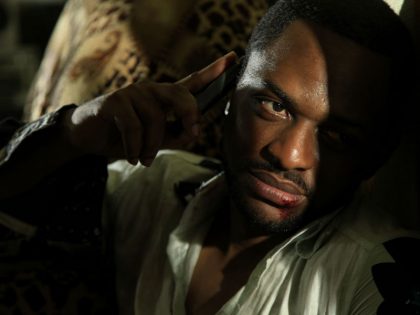
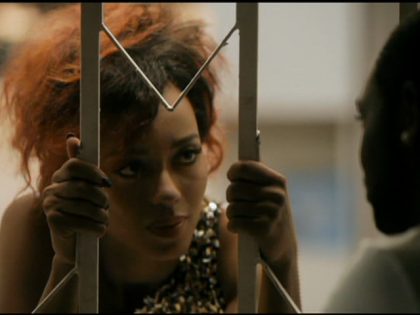
As if there weren’t already enough to tease out about Konono N°1 and Congotronics, a recent article in The Guardian points to a song and video called “Karibu Ya Bintou” by Baloji, a Congo-born rapper who cut his teeth on the Belgian hip-hop scene but who has worked over the last few years to return to “roots” — in part by incorporating “traditional” sounds of the Congo, from soukous guitars to Konono’s hallmark distorted likembé. The latter can be heard supporting the vivid video for “Karibu Ya Bintou”:
‘The Real Tarzan’ and other colonial fantasies

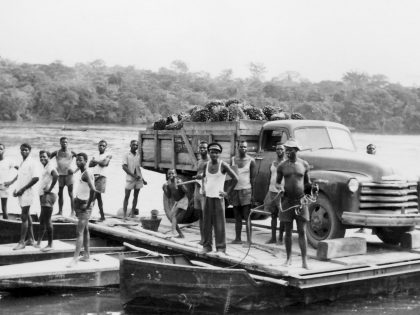
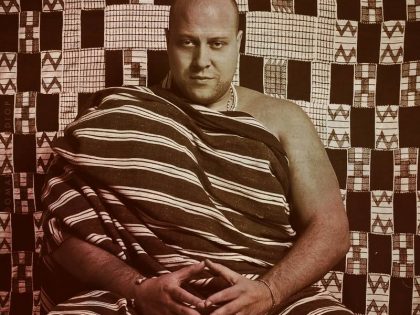
Blackbookmag.com reports that two British artists have built a “Heart of Darkness”-themed hotel in the shape of a steamboat on the roof of a Thames River arts center in London. It is named Roi des Belges (King of the Belgians). They charge between 120 and 185 pounds for singles or couples per night to stay in the hotel. “Inside, the cozy paddle steamboat is lined with timber, vintage books, and props that echo details from Conrad’s works, such as maps of Africa.” Two days ago, The Guardian (of all publications) put up a travel piece with this introduction: “I was alone in the middle of deepest, darkest Congo. Worse still, I was being chased by eight angry tribesmen in two dugout canoes – and they were gaining on me.” We figured it must be a joke. Then there’s this guy, DeWet Du Toit (in the images above and below), who left South Africa to work as a security guard in Manchester, and returned to George, a coastal town in the Western Cape region of South Africa (where else?), where he lives out his fantasy as ‘the real Tarzan’, complete with promotional video (he wants to break into Hollywood like Charlize and District 9), animals, black helpers (see the picture below) and friendly news coverage.
Some African Cup of Nations History

This item, below, from The Guardian’s (excellent) Sports Blog’s weekly round-up of Youtube videos (basically random stuff they dug up from the history of sports) can help get you into the mood for today’s last first round matches:
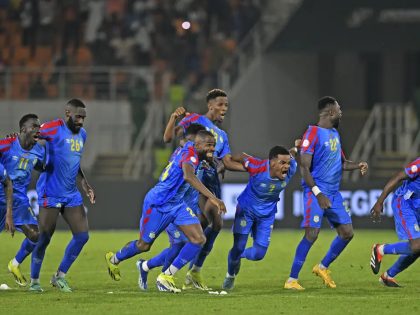
With the Africa Cup of Nations in full swing, what better time to look back at some of the tournament’s standout matches and moments. In the 86th minute of the 1998 third-place play-off Ibrahima Talle put the host nation Burkina Faso 4-1 up against DR Congo. Sparked by a horrendous piece of goalkeeping, what happens in the next 180 seconds of play is remarkable. Congo would go on to win on penalties; In a similar vein, one of the best games of the 2010 edition was Mali’s comeback from 4-0 down in the last 12 minutes against Angola (well worth watching for the commentator’s evil-supervillain laugh as the equaliser goes in); The 1992 final that ended 11-10 on penalties; One of the best goals scored in a Cup of Nations final – Chérif Oudjani hammering home after a nine-pass move to secure Algeria their first ever title in 1990 in front of a six-figure crowd in Algiers; Zaire’s Mulamba Ndaye [that's him above in a recent picture] still holds the record for goals scored in a single tournament with nine in 1974 – including both goals in the final. From way back in 1968 – highlights of the final between Congo and Ghana (featuring a unique bit of ‘stretchering off’). And last but not least, here’s Mido calmly accepting his substitution in the 2006 semi-final.
Sapeurs and Cemeteries
‘Vanité Apparente’, the exhibition of recent work by Congolese artist Yves Sambu — bringing together his interest in contemporary sapeurs and cemeteries — runs until February 24 in Brussels. Sometimes a good antidote to the colorful portrayal of the ‘Society of Tastemakers and Elegant People’ (think of the photographs by Héctor Mediavilla Sabaté, Daniele Tamagni or Baudouin Mouanda) works refreshing.
Music Break. LeslyMan
“What do they really know about us?” Fair question from Congolese artist LeslyMan. He could have added: do they still want to know about us now that the elections are over? Remember LeslyMan from last year’s collaboration with Lexxus.
How to write about elections in Africa
With a few elections coming up next year, journalist Jina Moore already has the template down for covering them: [Read more...]
Music Break. Friday Bonus Edition
Ploughing through the blog’s archives to come up with a fair selection of ten videos for next week’s year-end lists, I wondered why we haven’t written about the Congolese Salaam Kivu All Stars. Things went well in Goma, Kivu during the elections last week. A year ago, youth and media organization Yole! Africa staged the SKIFF festival in Goma (where they also shot the first video below), and they were planning to do so again this year. ‘Saisir l’Avenir’ means as much as ‘to seize the Future.’
The ‘safest option’ in Congo
For all the huffing and puffing in the West about the DRC’s cooked elections — President Joseph Kabila “polled” 49% and the Electoral Commission, stacked with Kabila cronies, “gave” opposition candidate Etienne Tshisekedi 32% of the vote — there’s a bottom line for elites. The Financial Times, in an editorial yesterday, gives it to us straight:
Britain funded this charade with £31m, the European Union with €47m, and the UN with $110m. They have all raised concerns. But the international community does not favour Mr Tshisekedi. Instead it is ready to choose the option perceived as safest: supporting the status quo.
Congo Votes
Over the past week, it was hard to find an article published in a major international press outlet not looking at the build-up to today’s presidential elections through the lens of fear and/of violence. With the exception of a few, most foreign journalists didn’t make it outside of Kinshasa (citing logistical problems). People did get killed in the Congolese capital on Saturday, and in Lubumbashi today, but the way this violence creeped into the international headlines clouds the calm and smoothness of the election process in other parts of the countries, as reported by Congolese citizen journalists on their blogs, in their local papers, or on their facebook pages. Congo is more than two cities. Other journalists tackled it from afar: The Financial Times, for example, is reporting the #DRC elections from Nairobi? That’s 2 days driving to Kinshasa.