The fear-riddled DNA

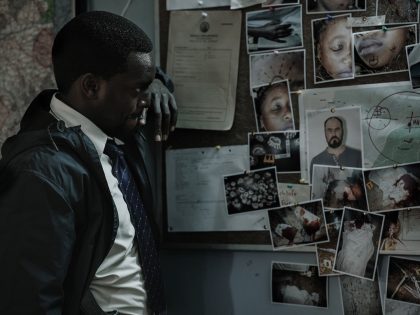
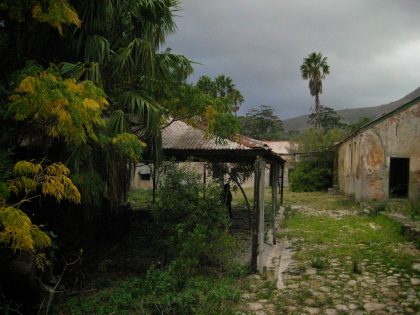
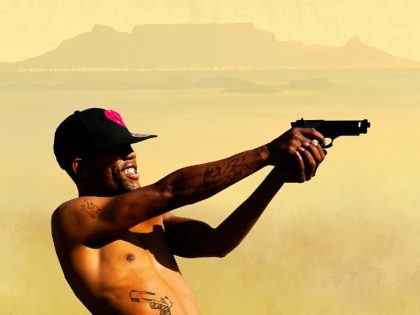
What was Egg Films thinking? This award-winning South African production house responsible for several corporate commercials and short films created this video for ‘The DNA project’, a local “not-for-profit company committed to advancing justice through the expanded use of DNA evidence in conjunction with a national DNA criminal intelligence database.” The Project prides itself on making this ad which, they say, “creates conversation,” because “it is paradoxical: a cigarette saves lives in a commercial where the lead woman dies.” If any conversation ensues at all, I’ve got a feeling it will not be about its intended message to “never disturb a crime scene,” but rather about its framing which feeds into a fear-riddled white South African state of mind.

The Nonviolent Transition in South Africa

The American philosopher Lewis Gordon, in an essay on affirmative action:

There are those who praise South Africa for making the transformation to a supposedly post-Apartheid society nonviolently. Without violence? The many blacks (in the Black Consciousness conception) and their supporters who were killed, tortured and imprisoned; the many protesters harmed; the tanks; the guns; the dogs; the 3 AM knock on the door; the many instances of trauma, none of them count? What is hidden in this misguided notion, as with what is suppressed about racism and sexism in the anti-affirmative action rhetoric of reverse discrimination and qualifications, is this: in a white supremacist state, violence is only recognized if it is waged against whites.

So, the hysteria about crime, about insecurity in South Africa is, as no doubt everyone knows, similar to the same in the United States. Even when the actual figures of violent crime declined, incarceration of blacks was high, because there was, in effect, the criminalization of a people. As violent appearance, black visibility was criminalized.

An odd feature of post-colonial states is that criminalization of black populations doesn’t require white institutional leadership. In so-called black countries, the phenomenon is there and it is color dependent, where darker-skin blacks are the most criminalized. The reasons for this are manifold, but most amount to the near isomorphic relationship between closed social options and skin color as a legacy of racialized slavery and colonialism in the midst of post-colonial environments heavily invested in keeping capital in the hands of the former governing population.

Source

Photo Credit.

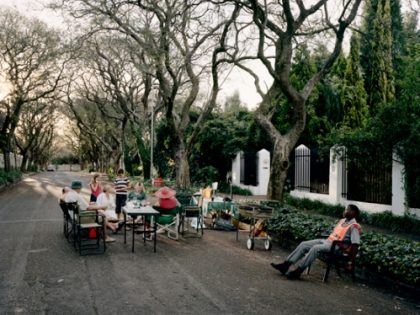
Street Party, Johannesburg

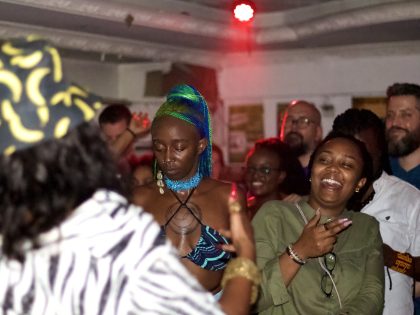
The series Security [by photographer Mikhael Subotzky] takes as its subject the guards employed for protection by the middle and upper classes in wealthy districts of Johannesburg. It includes a watched-over street party and a visual catalogue of the garden sheds or ‘Wendy houses’ that guards sit in to defend the houses and properties of their employers.

Eugene Terreblanche is Dead

The murder of  South African white supremacist leader, Eugene Terreblanche, over the weekend, will surely be exploited in the next few days. (Terreblanche was beaten and hacked to death by workers on his farm on Saturday who, according to reports, had “argued with him over unpaid wages.” Terreblanche had a violent history himself, including spending time in prison for beating one of his workers, a black man, nearly to death in 1997).   Though the incident is symptomatic of criminal violence in South Africa, and we don’t know much about the killers’ motives and most victims of crime are black, already all kinds of people will be trying to score political points and make claims about a race war against whites.

[Read more...]

THE ECONOMIST ON CRIME IN SOUTH AFRICA

goldblatt_03a

“… [D]espite public grumbles, the [South African] government has had some success. If new police statistics are to be believed, the crime rate for the 21 most serious categories has fallen by nearly a fifth in the past 15 years. The murder rate has fallen by almost half, rape is down by a third, and assault causing grievous bodily harm has dipped by more than a fifth. Yet South Africa still has one of the world’s highest murder rates, at 37 per 100,000 inhabitants: six times America’s rate and nearly 20 times Britain’s. Though some types of crime have gone down, the rate of violent house robbery has doubled in the past five years. Armed robbery at business premises has risen fourfold in the same period…”

The rest of the piece.

TWO MEN, TWO COUNTRIES

refugee03co_207123gm-e

I co-wrote (along with my friend Herman Wasserman) this op-ed, copied below, for Canada’s leading daily, “The Globe & Mail,” commenting on the case of the young white South African, Brandon Huntley, who was granted refugee status by an immigration tribunal there after he claimed black South Africans were formenting a race war against whites:

It is a tale of two countries, seen through the eyes of two men. One’s claim of persecution has been widely reported internationally. The other’s desperation only made headlines when it finally led to his death. Together, they illustrate the paradox of postapartheid South Africa.

[Read more...]

THEY JUST STOOD THERE WITH NO CLOTHES ON

hostels

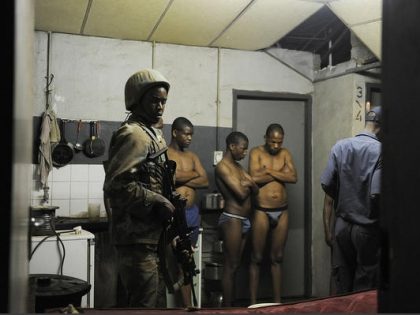
It’s okay to show photographs of black men in their underwear with the implication that they are criminal. That they live in a single sex men’s hostel built under Apartheid for black migrant workers, has a much to do with it. No identification or context necessary in the caption.

We normally associate this with journalists and publications from Europe and North America, but this time–surprise–it is a South African newspaper.

Picture series in “The Star”.

[Thanks to Herman Wasserman to pointing me towards it]

DROPPING THE SCIENCE

Music break from my favorite track of rapper Murs.

Here‘s a transcript of the song’s lyrics.

Follow

Get every new post delivered to your Inbox.

Join 1,912 other followers