The Strategic Kinship of Uhuru Kenyatta and William Ruto


Guest post by Kweli

We survived Kenyatta / We survived Moi
 / We might survive Kibaki
 / Will we survive ourselves? (Anonymous)

The Kenyan politicians Uhuru Kenyatta and William Ruto have never been closer. Although they are facing charges at the International Criminal Court (ICC), the two have been busy convening prayer-cum-political rallies across the country in their campaign for the presidency. At almost every rally Uhuru and Ruto have knelt on the dais, been anointed with oil and prayed for, and they’ve delivered campaign speeches that double as sermons about their persecution and martyrdom at the hands of the ICC. [Read more...]

Academic Blogger

The New York Times is onto something. First, it was the Weapons of Mass Destruction. And now… its investigative reporters have found another hitherto elusive entity: The Academic Blogger:  “A remarkable variety of scholars have achieved blogosphere fame, particularly those devoted to subjects related to the public sphere — politics, economics, legal affairs,” declares reporter Pamela Paul, with the breathlessness ordinarily reserved for revealing a new species.

Looks like some academics have found that it’s a desiccated world in the office space. The blogosphere allows them to be “deeply personal and, per the format’s wont, downright snarky in ways they are not in the classroom,” and offers them a space in which they can “regularly ruffle feathers” and even use the fanbase to troll for future spouses.

No surprises that all those featured are all white, mostly men (one woman: that’s the story about future spouses, coming up) and mostly rightwing, including the one woman. One and a half of those featured could be described as left; more on that later.

[Read more...]

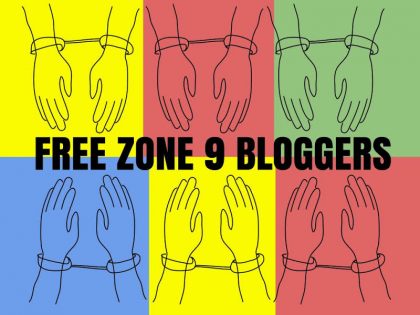
Statement by Bloggers on the Murder of David Kato

“We the undersigned wish to express our deep sadness at the murder of Ugandan human rights defender David Kato on 26th January 2011.  David’s activism  began in the 1980s as an Anti-Apartheid campaigner where he first expressed a strong passion and conviction for freedom and justice which continued throughout his life.   David was a founding member of Sexual Minorities Uganda where he first served as Board member and until his death as Litigation and Advocacy Officer and he was also a  member of Integrity Uganda, a faith-based advocacy organization.

David was a man of vision and courage. One of his major concerns was the growth of religious fundamentalism in Uganda and across the continent and how this would impact on the rights of ordinary citizens including lesbian, Gay, Bisexual, Transgendered / Gender Non-Comforming and Intersex  [LGBTIQ] persons.   Years later his concerns were justified when the Ugandan Anti-Homosexuality Bill backed by religious fundamentalists was outlined in 2009.  David was also an extremely brave man who had been imprisoned and beaten severely because of his sexual orientation and for speaking publicly against the Anti-Homosexuality Bill.

[Read more...]

Links

It’s Friday so here’s some links and stories I have managed not to give the proper treatment to this week.

* What’s Jeffrey Gettleman problem? This week he has a story in The New York Times about Somalia’s Radio Mogadishu, “the one and only relatively free radio station in south central Somalia where journalists can broadcast what they like–without worrying about being beheaded.”  Then he has to praise the Italians who once colonized Somalia (they dressed well), get people to tell him they’re “really dark” and bring up “Black Hawk Down.” He piles it on about derelict and broken down things are, except the story is accompanied by images of the soundproof studios with what looks like the latest computer editing equipment.

[Read more...]

Our Man in Cairo

The New Yorker has a piece by Joshua Hammer (who parachutes around the continent writing about anything and everything) about the struggle to succeed Egypt’s 81-year president, Hosni Mubarak, who has governed for 29 years. Mubarak became president when Anwar Sadat was assassinated by Islamic political radicals. He has looked frail in public and is in Europe now for a gallbladder operation.  Mubarak’s regime has quashed opposition (BTW, his actions have contributed to the rise of rightwing political Islam in Egypt) and stays in power largely because he is a major US ally in the Middle East. (Only Israel gets more US aid with little strings attached.) In the New Yorker piece we learn that Mubarak’s son, Gamal, is the favorite to continue the family business.  Gamal is in his 40s with a 20-something wife, was a C-student in college, is probably corrupt like his father, is groomed by the ruling party to take over the family business (sorry country), has a mean temper, would continue his father’s despotic ways, and Israel’s government favors him. Go figure.  As for the opposition, we learn little about them, except for a focus on Mohamed ElBaradei, a Nobel Peace Prize winner and former director of the International Atomic Energy, who returned to Egypt recently and has young people and liberals in Egypt all excited (especially bloggers–a favorite constituency of Western journalists), but we hear nothing about what people outside of elites think or want. But then for Westerners, Egypt’s politics have always been about making sure your elites are in power.

Sean Jacobs

Follow

Get every new post delivered to your Inbox.

Join 2,264 other followers