Since 2004, Le Salon africain (part of the annual Geneva Book Fair) awards the Ahmadou Kourouma Prize to an ‘African oeuvre, essay or fiction that reflects the spirit of independence and creativity which is the heritage of [Ivorian novelist] Ahmadou Kourouma’. This year the Prize goes to Rwandan author Scholastique Mukasonga for her latest novel ‘Notre-Dame du Nil’. Of the past 8 winning books, not one is available in English: [Read more...]
Not the Caine Prize
Black Bazar
Alain Mabanckou’s 2009 novel Black Bazar spoke successfully to and about the African diaspora in France, their daily hustle, fashion, style and language. All through the eyes of the Congolese migrant nicknamed ‘Fessologue’, sapeur and pub philosopher, and arguably the author’s alter ego. As a follow-up to the novel, Mabanckou now has produced an ambitious music album (“trying to change the way in which African music is perceived,” he says) with Congolese musicians Modogo Abarambwa and Sam Tshintu. Other contributing artists come from Cuba, Colombia, Cameroon, the DRC, Congo-Brazzaville and Senegal. The above music video shows us what to expect (and Mabanckou gets his cameo).
What you should be reading
I wasn’t pleased with the selection of short stories listed for the Caine Prize this year. That list made African writing look bad. Truth be told, the problem associated with such collections is hardly applicable to the Caine committee alone. Lists like that makes it seem like African writing remains subpar, and is simply being given a charitable helping hand by the largesse of nice prize-giving people.
Happily, the list below, including some of the most absorbing books of 2011, will convince you otherwise – read them all if you can (and please add those you’d recommend in the comments area below). I received several of the books for birthday presents/random presents from my partner, and read them on the journeys we make between New York City (where he works) and upstate New York (where I work). On those long train rides along the Hudson River–flowering trees, the ‘V’s of returning Canada geese, and kayakers in springtime to ice floes and 19th century industrialists’ castles, revealed among trees shorn of foliage during mid winter – there’s been more than one instance that someone sitting near us asked to have a look at the book I was reading. And surprise: their pleasure, from the first pages, was so obvious that I let these random strangers keep the book for the journey, re-learning what they know about African intellect, African poetics, African multiplicity in thought, ways of being, and life experience.
Black France
By Alain Mabanckou*
A few months before the presidential elections in France appears this ‘beautiful book’, La France noire, Trois siècles de présences (‘Black France, Three centuries of presence’ (eds.) Pascal Blanchard, Sylvie Chalaye, Eric Deroo, Dominique Thomas & Mahamet Timera, La Découverte, 2011). Since immigration has become an issue of politics and demagogues, many black people in France believe they would be better off in the English-speaking countries — the situation of their “brothers” living there seems to them more bearable… Yet, before the French Revolution and, to some extent, during the colonial period, it was better to be a black person in France than anywhere else. One sees it with the massive arrival of African-American intellectuals in Paris, victims of racial segregation in their home country. “It wasn’t until the 1980s that this feeling, this attraction to France declined, and that a black person would think himself more free, more accepted and more recognized in Britain, the United States or in Johannesburg, even if his citizenship was a fully vested right in France.”
The presence of black people in France spans the last three centuries.
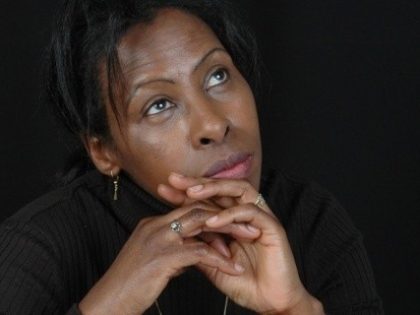
“Mabancool”
In France, Alain Mabanckou is known as “the African Samuel Beckett.” Mabanckou left Congo-Brazzaville in 1989 to study law in France, “but quit as a corporate lawyer within a decade,” according to The Economist. His first novel, “Bleu Blanc Rouge” (1998), “ironically saluted the French tricolor in its title”; following novels “moved between the dashed dreams of migrants in Paris and the ills of post-independence Africa”, his writing permeated with the absurdities of continually translating one’s body and intellect within empires that question one’s right to be there, here, anywhere.
Recently, France’s culture minister, Frédéric Mitterrand, gushed over him, calling him “Mabancool” and a “shining ambassador for the French language” as he presented Mabanckou with a Légion d’Honneur in March this year. Hilariously, Mabanckou’s subversions of the French language, suffused with Congolese immigrant city slang and bar-fly speak, was modeled on the manner in which Anglophone writers played in the fields of the British overlords’ language. Apparently, the writer’s subtle mockery was lost on those minding the rules of the Académie Française, too busy praying that ex-colonials writers will forget exclusions, slights, and outright racist policies, and help win back France’s metropolitan glory.
Few English speakers have heard of Mabanckou’s work, but only three of his books have been translated to English. But now that he is a tenured professor at the University of California, Los Angeles, more Mabancool may be on its way to us.
Read the review here, in The Economist: Prince of the absurd