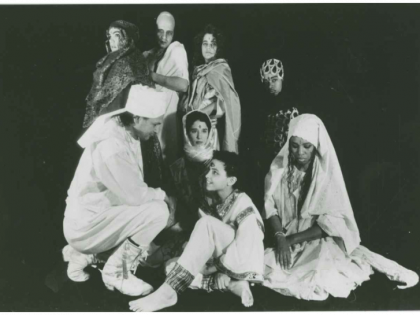
‘Tell Them You’re American’
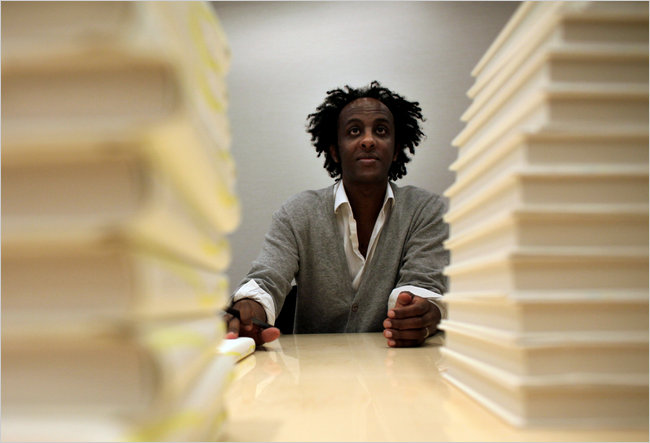
I can’t say I was completely bowled over by Dinaw Mengistu’s first novel, “The Beautiful Things That Heaven Bears,” about an Ethiopian immigrant in gentrifying Washington D.C. (Some of my friends loved it though and most literary elites here raved about it: The New York Times Book Review, for example, deemed it one of “the notable books of 2007” and earlier this year The New Yorker included him, along with Nigerian Chimamanda Adichie, in its “20 under 40” list of outstanding young fiction writers.) Mengistu has a new novel, “How to Read the Air.” I haven’t seen or read it yet, so no judgment from me yet. The New York Times recently did a profile of Mengistu. Predictably they have to include a reference to his “exotic” name. There’s also this bit about his identity as a child of immigrants to the US:
In eastern Congo [doing research for “How to Read the Air”] he ran into problems trying to interview Hutu rebels from Rwanda, who . . . didn’t know what to make of him. “I could speak English as well as I wanted to them, but they could only see that my features are what they consider Tutsi, and that was definitely threatening to my life,” he said rather matter-of-factly. “They would look at me, and my translator would say, ‘No, he’s American.’ He was always very specific, telling me, ‘Don’t confuse them, don’t try to say you’re Ethiopian, just tell them you’re American, don’t complicate things with this extra layer, because nobody’s going to believe it.’ ”
The full profile here.