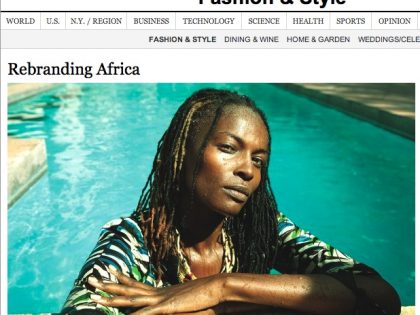
Livetweet Recap: NYT (and Vogue Italia) “Rebrands Africa” (again)


From a series of tweets I did on the New York Times story “Rebranding Africa” which you can read here. [Read more...]

Guggenheim’s map–Where is the rest of Africa?


Guest Post by Jennifer Bajorek and Erin Haney
The recent announcement of the Guggenheim Foundation’s new “Guggenheim UBS MAP Global Art Initiative” bears all of the hallmarks of the present era. It is funded by a bank. It has the word “global” in its title. It claims explicitly to challenge “a Western-centric view of art history,” according to the Foundation’s director, Richard Armstrong, in a piece by Carol Vogel recently published in The New York Times. The project will mount this challenge by investing in series of linked-up residencies, exhibitions, acquisitions for the museum’s permanent collections, and public programming with artists, curators and educators in parts of the world hitherto largely ignored by the museum. The modus operandi is encouraging, particularly when compared with late-20th-century attempts to bring non-Western art into dialogue with institutions in the North. The list of regions is long, and includes South and Southeast Asia, Latin America, the Middle East and North Africa. One thing it is not, however, is global: Africa south of the Sahara, and thus 2/3 of the continent, has been excluded.

[Read more...]

In Praise of Jeffrey Gettleman’s Pulitzer


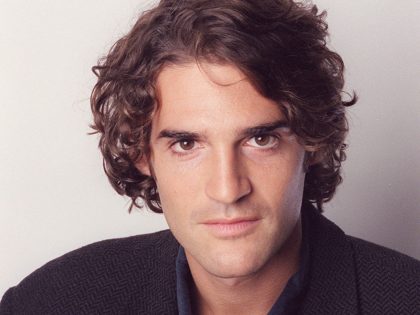
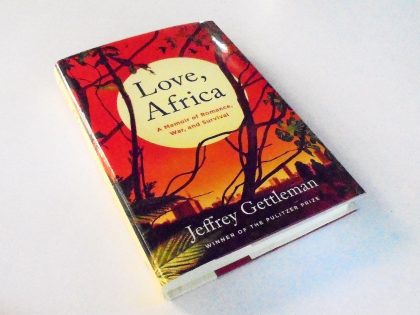
We couldn’t let the week pass without celebrating one of its more significant events: Jeffrey Gettleman, East Africa correspondent for The New York Times (yes, only in Africa can journalists cover territories so vast) was awarded a Pulitzer Prize–valued at $10,000–for “his vivid reports, often at personal peril, on famine and conflict in East Africa.” Floppy of hair, steely of jaw, noble of brow and almost invariably open of shirt, The Gettleman seems to have mustered his Pulitzer mainly by charming the Jury into submission with his carefully cultivated aura of old-world journalistic romance. The macho Gettleman thrusts himself into the torrid zone and must be decorated with all kinds of gongs and baubles. What did we expect? This is the Pulitzers after all. [Read more...]

Why is so much outside coverage of the Mali crisis so bad?


Why is so much outside coverage of the Mali crisis so bad? I don’t mean the conventional wallowing in clichés / recycling old images / harkening back to colonial stereotypes kind of bad, although there’s all that too. I mean the kind of bad that comes from being caught in a Beckettian loop of either saying nothing at all or having nothing to say. [Read more...]

Super Bowl Predictions


 I am trying to avoid the media blitz on the Superbowl and anybody keen to enthuse about all the “amazing” commercials. But sometimes I can’t look away. One trope gets me every time. It involves The New York Times and Giants linebacker Mathias Kiwanuka. Last week The Times did a profile of Kiwanuka. It recounts his tragic family history back in African: he’s the grandson of Uganda’s first prime-minister, Benedicto Kiwanuka, who was murdered by Idi Amin. Here’s what interesting: Basically the same story was published about Kiwanuka last week, in the Times in 2007 and before that in 2006. Like that’s the only story to tell about Kiwanuka.

[Read more...]

You need Nicholas Kristof

By Dan Moshenberg

O my friends, there is no friend! If you’re an African girl in trouble, there are only two things you can rely on. Your courage … and Nicholas Kristof. At least, that’s what Kristof would have us believe.

The story Kristof tells is the story he’s told before. This time he’s in Sierra Leone. A 15-year-old girl named Fulamatu is raped by her neighbor. This happens repeatedly, and Fulamatu remains in terrified and terrorized silence. She loses weight, becomes sick. Finally, when two girls report that the pastor had tried to rape them, Fulamatu’s parents put two and two together, and asked their daughter, who reports the whole series of events. They take her to the doctor, where she is found to have gonorrhea. Fulamatu lays charges against the pastor, who flees.

That’s where Kristof comes in.

[Read more...]

This Generation of African Women Leaders

Dan Moshenberg has written guest posts for AIAC before and we’ve HT’d him a few times. But this posts marks the first of his weekly posts here on gender politics.  He’ll keep the focus on Africa. Like today when he discusses Michelle Obama’s South Africa trip. Dan, who has lived in South Africa (I’ve known him for about 16 years), blogs at Women In and Beyond the Global (go check it out);and is director of Women’s Studies at George Washington University in Washington D.C.So watch out for it on Wednesdays–Sean Jacobs

[Read more...]

The Smiling Faces of Young Africans

Joy is possible amidst poverty and material commodities are not necessary for happiness. This was the lesson that Los Angeles Dodgers baseball player Clayton Kershaw learned during his recent trip to Africa. A feature in the New York Times by Karen Crouse describes the Dodgers player and his wife, Ellen’s trip to Zambia with the child sponsorship ministry, Arise Africa.

[Read more...]

Bwana Saves Africa

Today’s New York Times Magazine carries a fawning profile of John Prendergast, the force behind the Enough Project (reference: Congo, Darfur and now southern Sudan). Prendergast is described by reporter Daniel Bergner as “America’s most influential activist in Africa’s most troubled regions.” A former Clinton White House official, Prendergast probably wrote the book on how to utilize celebrity diplomacy. (Actors George Clooney, Angelina Jolie and Don Cheadle’s status as foreign policy experts originate with the Enough Project.) At best the article is interesting as a how-to manuel on influencing US foreign policy on Africa. At the same time reporter Bergner also undercuts his own thesis by conceding it is difficult to measure exactly Clooney and Prendergast’s importance in the recent surge of US public focus on Sudan. For the profile Bergner followed Pendergrast to southern Sudan where a referendum on the south’s political independence from the north is planned January 2011. Much of the information in the piece won’t be new to people familiar with Prendergast or developments in Sudan. Some readers may get a chuckle out of Bergner’s man-crush on Pendergrast. Bergner writes that Prendergast has “… wavy gray hair that fell to the shoulders of his T-shirt. The hair, along with the unshaven scruff on his chin, made for a look of dashing flamboyance that was undercut by bursts of boyish energy.” We also learn that Prendergast has no time for critics of his methods or his grasp of the issues, that he “has devoted all of his adult life to Africa,” and discovered “human suffering” when he saw scenes of Ethiopia’s 1985 famine on TV. Prendergast can’t stop himself from describing a first trip to Sudan in the 1980s as “… a bit of ‘Apocalypse Now’.” Not surprisingly, we also learn that he has been betrayed by Africans whom he has admired. Etcetera, etcetera.

Anyway, Howard French, former New York Times West Africa correspondent, best summed up the piece in a tweet: ”Bwana saves Africa. Part 3,276. Barf. Will we ever get beyond such stories?

Stuff White People Do*

He’s back.

If you’re new to the discussion, here’s a brief recap: Kristof recently answered some of his reader’s questions, including one submitted by Texas in Africa (TIA) in which she asked why his columns about Africa seem to portray “black Africans as victims” and “white foreigners as their saviors.” His answer left a little lot to be desired (as Sean noted here), so he is back with another response, titled “Westerners on White Horses…”

Now, for some people this is great—at least he hasn’t gone all Alex Perry on us, right? Well, some people is not me. And, let’s be honest, who still reads TIME? Anyway, on to Kristof’s latest response.

[Read more...]

Follow

Get every new post delivered to your Inbox.

Join 2,265 other followers