‘Developing the First World’
“Grandma’s going, so I am going too”
Short video piece on Jelani Gibson, a 16-year-old protester who traveled with his grandmother from Pontiac, Michigan to New York to join the protests Wall Street. He also has a 4.0 GPA. He had never slept on the street before. Tell that to US media.
Merkato
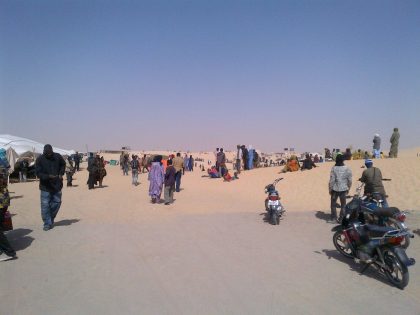
Merkato is a documentary (view the trailer here) about the largest open-air market in Ethiopia. The filmmakers are trying to raise funds to finish the project through kickstarter.
“Once”
A former The New School student, Pablo Mediavilla Costa, shot this meditative short documentary film around Ground Zero in Lower Manhattan the evening of September 11, 2011.
‘Days of Fire’
“Too much politics and the clang of commerce” is staining 9/11 commemorations here in New York City today. So it also makes sense that we look somewhere else for music that articulates how some of us feel. Thanks to Neelika for suggesting the song “Days of Fire” by Nitin Sawhney, featuring singer Natty, as an appropriate music break today. I agree. Performed in 2008 with the London Undersound Orchestra the song is based on Natty’s experiences of the July 2007 train bombings in London and its aftermath.
We also remember the other September 11.
More to Staten Island than ‘Mob Wives’
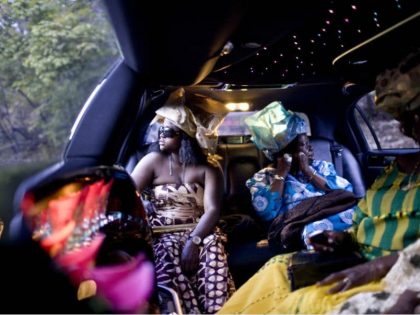
Photographer Glenna Gordon, no stranger to AIAC, is working on a new project in Staten Island, home to the largest population of Liberians outside of Liberia. I asked her if I could publish some of the work here. You can view the full set here. She also sent this note:
Most New Yorkers still think of Staten Island as working class Italian, but mainly due to the huge influx of West Africans from Liberia, Guinea, Ivory Coast and elsewhere, the black population of Staten Island has grown by 12 percent in the last decade. It’s hard to say how many Liberians and others live in Staten Island since many people haven’t sorted their immigration status. But there are plenty-o. I’m now splitting my time between New York and West Africa, and I’ve started a new photo project on Staten Island. I first went out there for a visit in mid-April. I attended a meeting of the Staten Island Liberian Community Association, which was a mix of formalities, community news, and a very loud argument between two old ma conducted in rapid fire Liberian English. I was invited to come back and photograph a special mother’s day program a couple of weeks later. And that’s how I found myself riding a white stretch limo around Staten Island on a Saturday night with a group of old Liberian ladies dressed in their fanciest lapa. I’m excited about working in New York for a change, and where this project might go.
Chief Boima plays Lincoln Center
He’s not just a blogger. This Sunday, August 7, at Lincoln Center DJ Chief Boima, who has been traveling in Ghana, Liberia and Sierra Leone this summer, will warm up the crowd–along with Ahficionados–between sets by Iyadede, Spoek Mathambo and Blitz the Ambassador. It’s free. If you’re in New York City (I’m in Massachusetts till August 14), and this hype video by the organizers doesn’t not convince, then there’s something wrong with you.
Maids in Manhattan
No not the bad Hollywood movie version with its fake set ups, but real life:
The life of a hotel maid [in New York City] is not an easy one, with naked men flaunting their wares, verbal abuse, lecherous suggestions and personal hygiene standards that would shame a chimp. But thanks to Dominique Strauss-Kahn, things may be about to improve.
There are more than 10,000 hotel maids – or room attendants as they prefer to be called – in New York City. An invisible army of cleaners working for $24 (£15) an hour (if they have a union job), they rarely hit the headlines.
But their work was thrust into the spotlight after the alleged attack by the former head of the International Monetary Fund on one of their number in room 2806 of the Times Square Sofitel last month.
Politicians are calling for security checks, more cases of abuse are coming out into the open and the voices of the maids themselves are being heard.
Masks at the Met
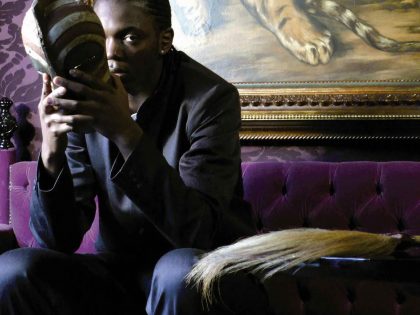
There’s been a resurgence interest in the inscrutable African mask in several museums lately, including this horrible one at the Barbie Museum. Its as if the more evidence there is that the African of the European imagination does not exist in static primitivity, the stronger the attempt to put it back into that caged zoo.
Thankfully, there’s something different at the Metropolitan Museum of Art in New York, in a small section of a first floor gallery: “Reconfiguring an African Icon: Odes to the Mask by Modern and Contemporary Artists from Three Continents” (March 8, 2011–August 21, 2011).
Ever since Man Ray’s image of the porcelain-white visage his mistress, Kiki, juxtaposed with that of a gleaming Baule portrait mask from Côte d’Ivoire was published in French Vogue (“Noir et Blanche,” May 1926), the West appropriated the African mask as the visual object that embodies static “primitivity.” Roll in Picasso, André Derain, and Henri Matisse, whose collective homage to the inscrutable Other helped manufacture visual distance from the primitive, while inviting comparison and desire.
The Met’s small exhibit includes the Beninese sculptors Romuald Hazoumé and Calixte Dakpogan (that’s Hazoumé “Ibedji (Nos.1 and 2) Twins,” completed in 1992, above) and American sculptors Lynda Benglis and Willie Cole. Using natural, traditionally used materials, the effluvia of consumption, and fine, coloured glass, these four artists experiment with re-personifying the performative and living qualities that masks embody in their original, animated contexts, re-configuring those traditional ‘Western’ associations of masks with the savage/native/other.
While Hazoumé and Dakpogan are artists who are intimately involved in the business of traditional masquerade and mask-making (Dakpogan is a descendant of a family of royal blacksmiths), their work gestures towards Benin’s long history of trade—exchanges that defined its cultural, religious, political and aesthetic history. Hazoumé use of a series of discarded petrol jerrycans, and Dakpogan’s repertory of discarded consumer goods, including cassette tapes, floppy disks, CDs, combs, sandals, and soda cans are a humorous nod to Marcel Duchamp’s readymades, inviting the viewer into a conversation about the multifaceted, multilinear relationship with the West, modernity and the disposable nature of consumption.