Zambia’s Turn


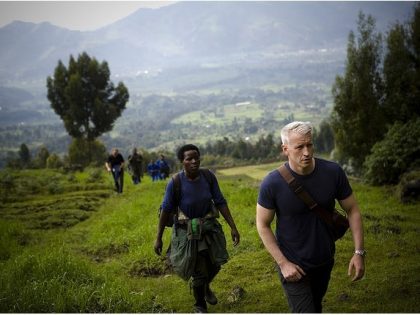
As someone who grew up in the leafy suburbs next to the Kafue River, I’m no longer surprised when reporters and tourists exclaim about the tranquility to be found “inside the Real Africa”—with no irony whatsoever.

[Read more...]

The Hall of Shame


Before Boima rides us out this year with West Africa’s best dance tunes, we couldn’t resist including a post with some of the lowlights of 2011.

[Read more...]

Islamismisms

Not unsurprisingly, the news that the Muslim Brotherhood’s Freedom and Justice Party, along with Salafists, received the bulk of votes cast in Egypt’s first elections since the ouster of Hosni Mubarak, was met with dismay by our friends in the media.

“What does this mean!?” pundits on CNN, Fox and whatever other useless channel you’re watching asked.

[Read more...]

Jennifer Hudson is no Winnie Mandela

The Representation of Ghana

In early April CNN‘s website posted a video report on internet fraud in Ghana by its media partners, hipster producers Vice. The program focused on “Sakawa,” a form of internet scamming popular in Ghana, similar to the 419 scam originating in Nigeria. The Vice piece suggested that Sakawa, popular among young men, was out of control–that it had taken on the significance of a national crisis. The piece, predictably contained the usual stereotypes of Ghana and Africans. Since then the Ghanaian blogosphere have been in uproar. Reactions veer between denunciations of CNN and Vice–Global Voices Online summarized it here–to acceptance that Sakawa is a problem, i.e. “the big elephant in the room” (see, for example, the views of the blogger Sinaisix–blogging here.) American bloggers have also weighed in. Others have now drawn up a petition denouncing CNN. To make sense of  all this, we spoke to Jenna Burrell, an assistant professor at Berkeley’s School of Information, who does research on internet use among young people in Ghana, her opinion–Sean Jacobs

What are your general impressions of the Vice video piece on Sakawa in Ghana? What did they get wrong? What did they get right?

What the Vice video got right was the emergence of Ghanaian internet scamming as a subculture–the ‘sakawa boys’ with their particular styles of clothing and cars. They also got some things right about how sakawa is emerging as a pop cultural phenomenon, as a theme in popular Ghanaian movies and music. It also picked up a bit on this resentment of Western affluence and the history of Western exploitation of Africa that scammers sometimes speak about.

What the video got wrong I think was in the way it equated Internet scamming with ‘juju.’ Are young Internet scammers regularly using such practices, enrolling spiritual forces, to enhance their online activities?  It is really unclear at this point. The circulating stories, even what scammers themselves say about what other scammers are doing can’t just be taken at face value as the documentary seemed to do. The young scammers I spoke with in Accra just this past summer (June and July 2010) categorically denied using any such techniques–stating that their success was through telling persuasive stories (what they referred to as the ‘format’ of the scam) and through their persistence in pursuing scam targets.  I think the rumors and pop culture references to ‘sakawa’ are better understood as part of a longstanding debate about wealth accumulation and morality in Ghanaian society (more on this below). The stories (whether in rumors or in movies) are their own thing, not simply a mirror of scammer strategies.

If I might say it this way, I thought the tenor of the video got things very wrong.  It was self-interested, a nod-and-wink to the Western audience assumed to be looking on at this “bizarre” and exotic foreign Other. The video tried to temper this a bit with some comments on how such practices (as they say “if you think about it”) are no more bizarre than Western practices like communion or circumcision, yet still ultimately it was the circus sideshow freak approach (cue the video of the “juju priest” in grass skirt and talcum powder throwing eggs).  Why, for example, did the video start from an electronic waste dump site rather than somewhere like BusyInternet, Accra’s biggest Internet café where lots of different people are using the Internet to do things that don’t involve scamming?  Overall the video privileged visual appeal and spectacle over a balanced story.

I also think many Western media outlets, especially Internet-based ones, don’t have a firm grasp on the fact that their audience is going to be composed of people from around the world as the Internet becomes more widely adopted. This audience will include Ghanaians and other Africans connecting from the continent as well as Ghanaians in the diaspora. So news services are going to be held accountable by the people or societies they are depicting.

[Read more...]

The Elephant in the Room

Will the “global” furore over GoDaddy CEO’s canned elephant hunt really lead to a boycott of his company?

Last week when Bob Parsons, CEO of the Internet domain company boasted of his latest kill, and posted pictures and video of himself posing with a gun and a prone elephant on his Twitter site, outrage ensued. Parsons claims that the elephants he shot, on his yearly visits to Zimbabwe, are rogues who destroy crops. (The media, probably tired of Libya’s inconclusive civil war and under pressure to focus on something else other than Donald Trump’s bigotry and advertising strategy, made this the big story by week end last week.)

As Parsons reminded journalists, he donates the meat to starving villagers who are so poor that they vie for the “treasured” plastic water bottles (which he takes with him to avoid “Montezuma’s revenge, as he clarifies) from which he drinks. They also like the cheap GoDaddy baseball hats he hands out.

[Read more...]

‘We should have left it in North Africa in the first place’

This conversation on CNN (about an escaped Egyptian cobra at the Bronx Zoo) strikes me as a particularly apt allegory of the United States’ relationship to the revolutions throughout Africa and Asia.–Sophia Azeb.

Patriotism, Ivorian Style

Away from Al Jazeera English, Twitter, Facebook and CNN’s cameras and his country’s media muzzled and harassed, Cote d’Ivoire’s life president and xenophobe, Laurent Gbagbo, uses the army (this is crucial support; about 60,000 men) and armed youths– doing drill exercises in the football strip of the national soccer team and calling themselves “The Young Patriots”–to prevent democracy. The group is led by Charles Blé Goudé, who has been sanctioned by the UN for hate speech, and posed for pictures with Jesse Jackson. Gbagbo, who lost presidential elections two months ago, refuses to step down. He still lives in the presidential palace. The winner of the election, Alassane Ouattara lives in a hotel in the Ivorian capital, Abidjan, surrounded by UN peacekeepers. Gbagbo’s stormtroopers like to talk of war.

Watch 16 minute report by France 24.

‘Who’s Telling Our Story?’

[Read more...]

Journalism

Follow

Get every new post delivered to your Inbox.

Join 1,912 other followers