Pay young women in Malawi to prevent HIV infection?


The Guardian reports: “Cash payments help cut HIV infection rate in young women, study finds: Research in Malawi finds girls who receive regular payments are able to resist attentions of older men and avoid infection.” The headline pretty much says it all … or does it?

[Read more...]

Sending South African miners home to die


Epidemiologist Jonathan Smith is working to complete a documentary called ”They Go to Die,” about the lives of four former mineworkers that were sent home from the mine after contracting TB and HIV in the South African gold mines. The men–like thousands of men each year–are affected by a process known as ‘sending them home to die’ that occurs in the South Africa mining industry, where migrant men who become sick with TB are sent home with little or no continuation of care, follow up, or chemotherapy (despite the fact that medical care is available on the mine premises).

[Read more...]

The health news that made the headlines

In November came the news that the Global Fund to fight Aids, TB and Malaria was in a financial crisis, because of declining donor commitments and failure by donors to honor existing commitments. The Fund’s board cancelled Round 11 of its funding applications, which was supposed to provide money for 2011 to 2013.

[Read more...]

Helen Zille’s ‘AIDS Gestapo’

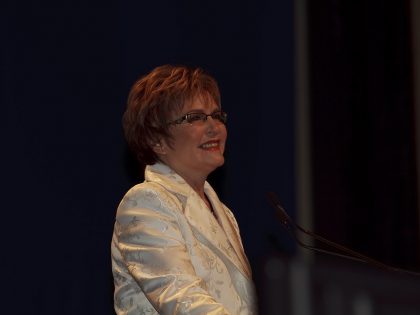
Just as South Africa is recovering from the havoc wrought by former President Thabo Mbeki’s AIDS denialism, now there’s a new politician spouting all sorts of nonsense – this time it’s Helen Zille, the leader of the opposition Democratic Alliance. She’s been active on Twitter and in the media, calling for the criminalization of HIV transmission, and saying the state should not have to pay for treatment for those who contracted HIV through irresponsible behavior. She also recently held a lottery, where people who volunteered to get tested for HIV could win a large cash prize.

[Read more...]

Helping Themba

The Dutch ‘Stop Aids Now!’ campaigns have a long tradition of appealing to potential donors in Holland’s streets. November and December are the months the posters and TV ads pop up (around World Aids Day on December 1, coinciding with the arrival of Saint Nicholas and his Black Petes, and the ensuing spending spree) — staple NGO tactics this time of year. With governments slashing their international aid budgets, the street is where NGOs will need to scrape their money together. So you tell the Dutch that African kids “Mary and Neema don’t know how to prevent AIDS, but you do.” Or you show them (as in the video above) that while Dutch Alex wants a video game and Esther and Kim want a skippy ball, Themba wants to know “whether kissing will make you HIV positive,” and that “Ayanna wants a long and healthy life.” A reader suggested it was a rather patronizing and regressive campaign. She’s being too kind.

Jadakiss and the King

Who advised the rapper Jadakiss to take this trip (recounted in this promotional video shot by his people; watch from about 5:50) to Swaziland where he went to perform at a “fundraiser” for Swaziland’s royal family. As we know the royal family really needs the money. This is the same royal family whose king, Mswati III, paid for a US$6.3 million shopping trip by his wives to Asia in 2009; Swaziland is a country where about two-thirds of the people live in abject poverty, and more than a quarter of the adult population has AIDS. Oh, and the money from the national treasury for his family’s upkeep is equal to the education budget. So who paid for Jadakiss’ trip? I know the Swazi people weren’t happy about this. In fact, they asked him to leave and boycotted his show.

The inequality of news

Simon Kuper in the FT Weekend, takes shots at “the news,” maybe also at his own newspaper:

… [N]ews has become news about rich people. Today’s economic inequality is reflected and driven by inequality of news.

Much of this news about rich people is produced by just a few English-language sources. A wire service will put out a story, a newspaper will get a scoop or BBC.com will run a headline, and within seconds the “news” gets parroted by websites, TV channels and newspapers from Warsaw to Waikiki. It saves them hiring their own reporters. Lady Gaga sings at a gay pride rally in Rome and the whole world simply reprints the story.

And so news becomes news about a small global elite of athletes, entertainers, royals and politicians …

[Read more...]

Cyril Ramaphosa and AIDS

The latest print issue of Foreign Policy Magazine has an essay by South African writer Johnny Steinberg on creative writing about the AIDS pandemic in that country. Steinberg covers the usual ground: that mainly white, gay men have written memoirs about AIDS; that memoirs about black men’s experiences with AIDS were written by white women; that popular AIDS media (like LoveLife, the AIDS education campaign targeted at teens) do not openly make connections between sex and AIDS; and that fiction writing by black writers, until recently, have shied away from themes of sex and sexuality. Nothing new here. However, the piece does get interesting when Steinberg asserts that former President Thabo Mbeki, a known AIDS denialist, “… was not necessarily the outlier he is often said to be [on AIDS]. His dabbling in quack science and AIDS denialism was symptomatic of a great unease in South Africa’s political culture, one that has translated into an eerie silence on the page.”  Steinberg then makes these claims about Cyril Ramaphosa, once touted as a successor to Nelson Mandela as South African President:

[Read more...]

Snake Oil

Selling desperate people false hope, especially AIDS patients, are common on the African continent–well documented in my native country, South Africa–now there’s this “faith healer” in Tanzania who has people in East Africa traveling thousands of miles for a homebrewed drink that he claims can cure AIDS, cancer, diabetes, and other “incurable diseases.” There’s no evidence it does. The report above is by Kenya’s private NTV network. Above is Part One of the NTV report; below is Part Two.

[Read more...]

Preventing Project Prevention

After years of working in the United States, where they pay female drug users $300 to agree to be sterilized, Project Prevention has begun branching out to other parts of the world. Following a luke-warm reception in Britain, the organisation has now turned its attention to Kenya where it plans to start paying women living with HIV/Aids to accept long-term contraception.

Project Prevention is headed by Barbara Harris, who started the organisation in 1997. It was initially named CRACK (Children Requiring a Caring Kommunity). While her PR has become more sophisticated in recent years, Barbara Harris has famously been quoted as saying “We don’t allow dogs to breed. We spay them. We neuter them. We try to keep them from having unwanted puppies, and yet these women are literally having litters of children.”

[Read more...]

Follow

Get every new post delivered to your Inbox.

Join 1,912 other followers