Pepe Reina and the shagging African cannibals

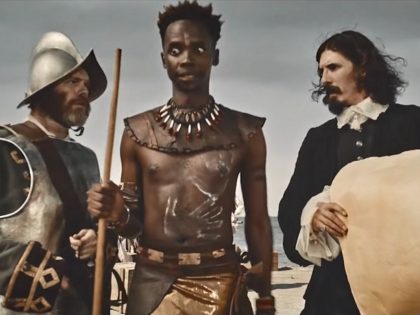
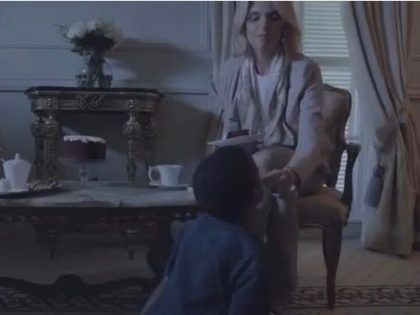
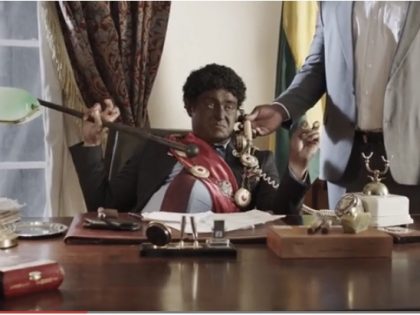
Pepe Reina, Liverpool and Spain’s national team goalkeeper, is a spokesperson for the Spanish multinational insurance company Groupama Seguros. In a new TV ad, Reina lands up in a jungle where a blackfaced chief claims Reina as his wife. You get the joke: it’s supposed to be a play on Reina’s last name which translates as “Queen”. Haha. After complaints about its offensive nature, Groupama Seguros pulled the ad, but denied it was in any way offensive. As OBV reports, Groupama Seguros released a statement saying it “… does not consider that this advert contains either offensive nor any discriminatory content.” As my man Davy Lane asks: “It’s all animals and cannibals and wild shagging in Africa. Racist, small minded fools all over the shop in Spanish advertising and marketing circles? A reflection of racist Spanish society?” It also makes you wonder what goes on in the club house at Liverpool Football Club. I’ll refrain from commenting on the comments on Youtube where viewers are asking how this could be racist.

[Read more...]

Pizza aid

By Elliot Ross

What happens when humanitarian agencies ditch the tried-and-trusted fundraising method of splashing disaster porn across screens and news pages? What kind of images can possibly fill in for the altogether enthralling scene of non-white bodies wracked with overwhelming pain, images which express nothing but pure need? With Action Against Hunger’s new ad campaign, we’re beginning to find out what an alternative might look like.

As good students of Don Draper, we all know that advertising is based on one thing: happiness. According to Don this entails at least three things: smelling the interior of a new car, freedom from fear, and a billboard on the side of the road that screams with reassurance that whatever you’re doing is okay.

Which is all very well, provided an ad follows the underlying logic of advertising — lying to people to make us want something we don’t really need.

But with humanitarian advertising something strange happens. It would appear that when humanitarian groups solicit money from consumers of mass media an altogether different transaction is being proposed, namely one in which an advertiser tells the truth and compels people to hand over surplus cash so that the real and urgent needs of others can be met. At least, that’s something like how it should go.

Trouble is, the old consumer mentality dies very hard, and the two modes of advertising are all jumbled up. There aren’t two different kinds of advertising space, one for commercial ads and another for humanitarian appeals.

(This is one reason why self-evidently anti-humanitarian companies like BP, ExxonMobil, Shell, Chevron and others have lately gone to such conspicuous lengths to try to convince everybody that they’re actually much more like groups such as Greenpeace, or Medecins Sans Frontières, or the Disasters Emergency Committee, than they are like the sort of oil-spilling, icecap-melting, Iraq-invasion-lobbying, Saro-Wiwa-murdering transnational shysters that we might otherwise have quite innocently supposed them to be.)

In any case, the suspicion has long lurked that gawping at pictures of starving children in Africa might have somehow crossed over into the Don Draper realm of advertising, and become a source of happiness for the kindly Western reader. (And this mix-up, it must be stressed, has nothing whatsoever to do with the noble tradition of racism in Western culture extending back to Hegel and beyond.)

In fundraising campaigns from the Biafran war onwards it became clear that the most effective way of raising money for starving (almost always African) populations was also the way that luxuriated in the vulnerability of the hungry, that enjoyed not only Western power to save but Western power per se. And it now seems that more and more people are coming to the conclusion that weaving images of some of the world’s most vulnerable people into our ever brasher, crasser mediascape is not ok.

So what to make of Action Against Hunger’s latest efforts to depart from all this? What is the face of hunger advertising that has decided not to show a face? [Read more...]

White People Eat Fried Chicken

Allison Swank
Just as Nelson Mandela went underground as the Black Pimpernel in 1961 to evade the white apartheid government, in this TV ad for  a popular South African fast food chain, this white Afrikaner family goes underground in 1994 to escape Mandela’s black government–what?

[Read more...]

Has Nandos lost the plot?

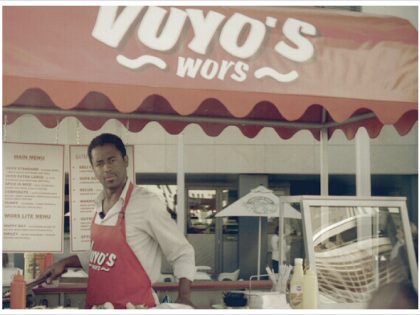
The South African fast food chicken chain Nando’s (which has of late also become very popular in Britain) has always been known for their good adverts. They usually manage to combine a quick-off-the-mark, topical sense of the news with a particularly South African brand of wit and irony. Take for instance their ads featuring Julius Malema last year, which made the ANC Youth League so angry they called for its withdrawal (Julius, on the other hand, just wanted Nando’s to pay him).

But I’m not sure their latest ad (see the clip above) hits the mark.

[Read more...]

The ‘Lost Bushmen’

It is still okay to create the most objectionable stereotypes about certain Africans and for it to be considered fine.

An Indian soft drink company, Parle Agro, is marketing a new soft drink, called LMN, with a series of  5 TV commercial series titled “Lost Bushmen” set “… in the [Bushmen's] natural habitat of the Kalahari Dessert.” Serious.

Here’s another one:

[Read more...]

Bling Bling

[Read more...]

WEEKEND LINKS, AUGUST 14, 2009

fietas.kite1

* The photography of Bronwyn Lace (via Feizel Mamdoo).

* The short film project, 15 Malaysia. You can watch all the films online.

[Read more...]

RACE RELATIONS

500x_500x_PreviewScreenSnapz001-thumb_02

[Read more...]

WHY “MAD MEN” IS AFRAID OF RACE

mad men party

The very popular TV drama “Mad Men” (my wife is hooked) is willing to engage the toughest issues of its time–the 1960s–and use them to provide an insight into our current social norms: anti-Semitism, divorce, sexuality, misogyny and domestic violence. But it won’t touch race beyond very shallow and superficial treatment, argues Latoya Peterson, a hip-hop feminist and the editrix of RACIALICOUS.COM, writing in DOUBLE X.

Mad Men takes on a number of cultural controversies, yet race is treated with politeness, distance, restraint, and a heavy dose of sentimentality. For a show that takes place in the early ’60s, as race riots are breaking out, this is a glaring omission.

[Read more...]

TV’s “THE SIMPSONS” MOVE TO ANGOLA

simpsonsangola

No, the characters of the FOX TV animated show have not left their home in Springfield. It’s just a TV ad campaign promoting the show on Angolan TV. Apparently Homer is drinking the local brew, Cuca, “the Budweiser of Angola,” Bart is wearing the popular Angolan flag t-shirt, while the girls braided their hair. [Here's a link to the original image]

[Via Animal New York; HT Marissa]

Follow

Get every new post delivered to your Inbox.

Join 2,264 other followers